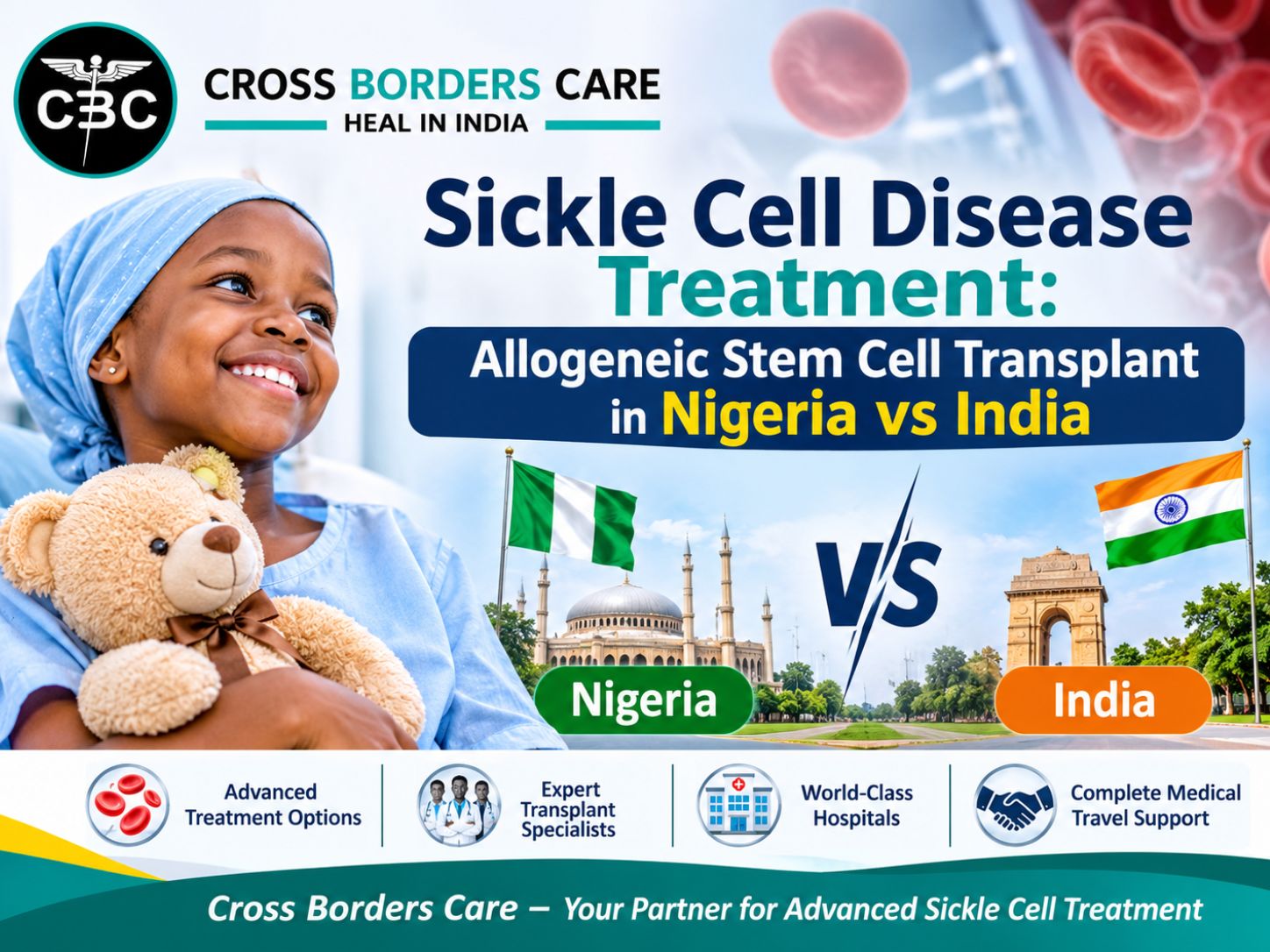
Nigeria has the largest number of people living with Sickle Cell Disease in the world. For many families, a cure once felt out of reach. Today, curative options exist, but access, expertise, and cost differ between the countries. This guide will help you understand the options for allogeneic stem cell transplant in India.
What is Allogeneic Stem Cell Transplant?
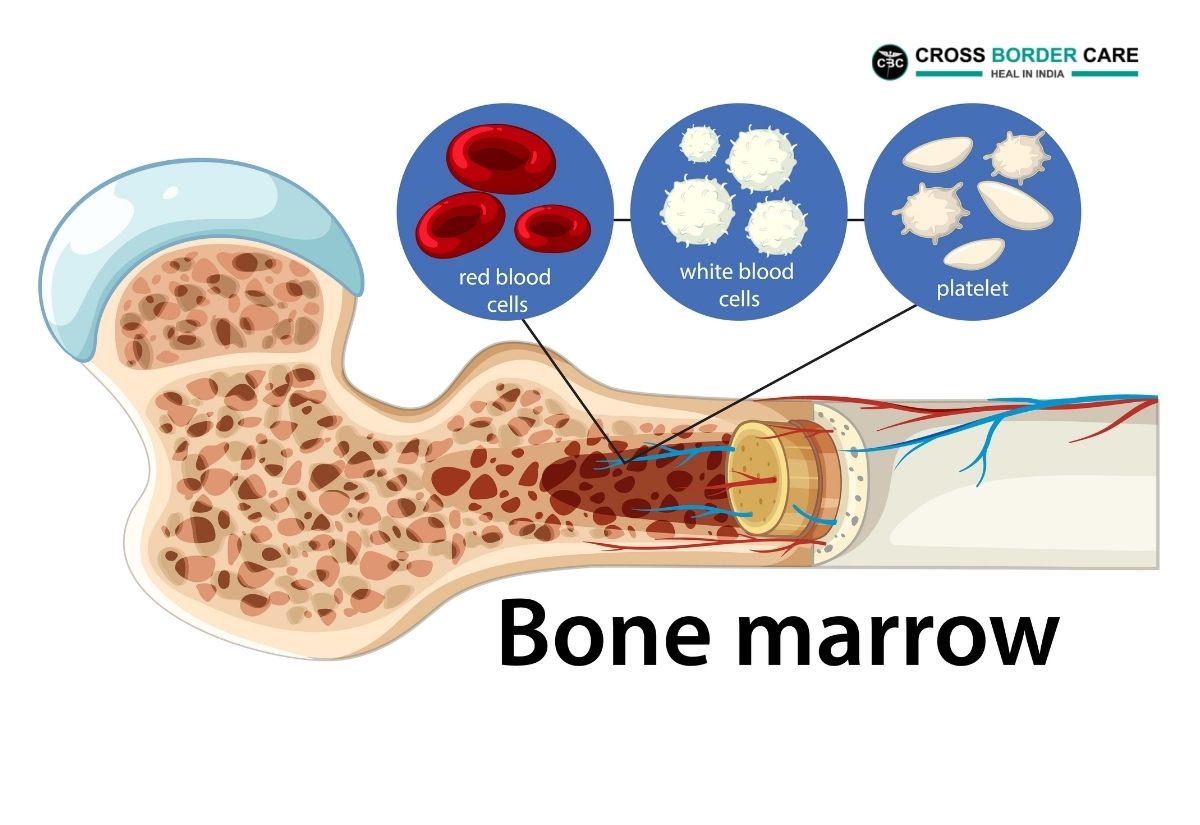
It is a medical procedure in which a patient receives healthy stem cells from another person to replace damaged, diseased and destroyed bone marrow. It treats certain blood cancers and serious blood disorders, including leukaemia, lymphoma, myelodysplastic syndromes, and aplastic anaemia.
The donor may be a matched sibling, an unrelated volunteer, a partially matched family member (haploidentical donor) or, in some cases, a source of donated umbilical cord blood.
How Does an Allogeneic Stem Cell Transplant Work?
- Donor matching: Doctors perform HLA (human leukocyte antigen) testing to identify a suitable donor.
- Conditioning treatment: The patient receives chemotherapy, sometimes with radiation, to prepare the body for transplantation.
- Stem cell infusion: Healthy donor stem cells are infused through an intravenous line, similar to a blood transfusion.
- Engraftment: The transplanted stem cells travel to the bone marrow and begin producing new blood cells, typically within 2–4 weeks, depending on the stem cell source and treatment.
- Recovery and monitoring: Doctors monitor blood counts, infections, immune recovery and transplant-related complications.
Which Hospitals Currently Offer Sickle Cell Stem Cell Transplants in Nigeria?
Nigeria has made progress in providing curative treatment for sickle cell disease. However, the number of hospitals offering allogeneic stem cell transplantation remains limited.Some of the centres with documented transplant experience include:
- Lagos University Teaching Hospital (LUTH), Lagos: In partnership with the Sickle Cell Foundation Nigeria (SCFN), LUTH operates a dedicated bone marrow transplant programme. Its first group of patients began undergoing transplantation in August 2024.
- University of Benin Teaching Hospital (UBTH), Benin City: This hospital performed Nigeria’s first reported stem cell transplant for sickle cell disease in 2011.
- Celltek Healthcare Medical Center, Benin City: This centre has documented experience with matched-sibling and haploidentical stem cell transplantation.
What Are the Limitations of Allogeneic Stem Cell Transplantation in Nigeria?
- Limited Availability of Half-Matched Donor Transplants
- Limited Number of Experienced Transplant Specialists
- Gaps in Advanced Support Services
- Limited Access to Advanced Transplant Infrastructure
Nigeria vs India at a glance
| Factor | Nigeria | India |
| Routine SCD care (hydroxyurea, transfusion, screening) | Widely available, improving | Widely available |
| Paediatric BMT for SCD | Very limited programmes | Established paediatric BMT units |
| Donor options | Mostly matched sibling | Matched sibling and haploidentical |
| Travel and stay | None | Visa, flights, several months’ stay near hospital |
| Family and cultural support | Strong, at home | Needs planning (caregiver, accommodation) |
| Cost | Matched BMT – 22000 usd Half Matched – Not available |
Matched BMT – 22000 usd Half Machted – 26000 usd |
| Follow-up after transplant | Local | Must be coordinated with a Nigerian haematologist |
Why Many Nigerian Families Are Turning to India?
Local treatment is always easiest for families, but BMT for SCD needs a very specialised set-up, and that is where families often look to India, because of the following reasons:
- Dedicated paediatric BMT units. Several Indian hospitals like Rainbow Children Hospital in India under the guidance of Dr Nandini Hazarika run separate transplant programmes for children, with child-friendly isolation rooms, paediatric nursing and teams that handle only children.
- Experience with different donor types. Not every child has a fully matched sibling. Indian centres regularly perform half-matched (haploidentical) transplants, which widens the number of children who can be considered.
- Cost. Treatment in India is generally much lower than in Europe or North America. 2200 usd for full matched stem cell transplant and 28000 usd for half matched bone marrow transplant
- Proximity and travel. India is reachable from Nigeria with a medical visa, and many hospitals have international patient departments with interpreters and coordinators.
- Accredited hospitals. Many leading hospitals hold national or international accreditation, such as Fortis Memorial Hospital and Indraprastha Apollo Hospital.
India is not the right choice for every child, and it involves travel, a long stay and separation from home. The best decision is made after a doctor reviews the child’s reports.
Best BMT Doctors in India for Sickle Cell Disease
Dr. Gaurav Kharya – Indraprastha Apollo Hospital, New Delhi
Dr. Gaurav Kharya is a paediatric haematology and bone marrow transplant specialist with international fellowship training.He has published research on haploidentical transplantation for sickle cell disease, including the APOLLO Protocol, designed to improve transplant outcomes.
Dr Rayaz Ahmed: Max Healthcare
Dr Rayaz Ahmed is a clinical haematologist and bone marrow transplant specialist at Max Super Speciality Hospital in Delhi, India. He has 15 + years of experience and has performed more than 1000+ bone marrow transplants. His areas of expertise include autologous stem cell transplant, allogeneic stem cell transplant, and haploidentical stem cell transplant.
Dr Nandini Hazarika: Madhukar Rainbow Children’s Hospital
Dr Nandini Hazarika holds an MBBS in Paediatrics and works as a Consultant in Medical Oncology and BMT. She is currently associated with Madhukar Rainbow Children’s Hospital in Delhi and has earlier worked with leading Delhi NCR hospitals. She has done more than 150 bone marrow transplants in the last 8 years for conditions like thalassemia, aplastic anaemia, and leukaemias.
Dr Vikas Dua-Fortis Memorial Research Institute, Gurugram
Dr Vikas Dua is the Principal Director and Head of Pediatric Haematology and BMT at Fotis. With 20+ years of experience across different hospitals, his areas of expertise include sickle cell anaemia and bone marrow transplants. He and his team have done more than 200 pediatric transplants and specialised in pediatric haploidentical transplants.
How does CBC connect you with these doctors?
Share your child’s records. Send the haemoglobin electrophoresis report, recent blood counts, crisis and transfusion history, and any scans or organ tests. Our team checks that nothing is missing.
We approach the right specialist. Based on your child’s condition and your preference, we send the case to one or more of the doctors above and ask whether a transplant is suitable.
Donor matching. If a transplant looks possible, we help arrange HLA typing for the child and family donors.
Opinion and estimate. You receive the doctor’s recommendation and an itemised cost estimate so that you can decide without pressure.
Travel and stay. If you go ahead, we support medical visa letters, flights, accommodation near the hospital and caregiver arrangements.
Coordination during treatment. CBC stays in touch between you and the hospital team for appointments and updates.
Return home. We connect the Indian team with your Nigerian haematologist so follow-up continues safely at home.
Don’t wait for the “right time”
Many Nigerian families live with sickle cell for years. They learn to manage the pain crises, the hospital nights and the missed school days. Some tell themselves they will look at transplant “when things get worse”, or “when we can afford it”, or “when we are sure”. Others fear the cost, the distance, or sending a child so far from home.
These fears are real, and no parent should be judged for them. But waiting also has a cost. With every crisis, the disease can quietly affect a child’s organs, growth and schooling. Transplant works best when it is considered early, while the child is as healthy as possible. You do not have to decide today. You only have to ask the question.
Take the first step with Dr Nadeem Khan.
Talking to someone does not commit you to anything. It simply tells you whether your child is a candidate and what the road would look like.
Dr Nadeem Khan, director at CBC, has coordinated 500+ transplants for families travelling from Africa to India.
When you contact him, he will:
- Listen first. He will understand your child’s history, your family situation and your concerns.
- Review your child’s reports and tell you honestly whether a transplant looks suitable or not.
- Guide you on donors. He will explain sibling and family HLA testing, and what to do if there is no fully matched donor.
- Connect you with the right specialist among our partner doctors in India, based on your child’s needs.
- Give you a clear, itemised cost estimate, so there are no surprises later.
- Plan your journey with you: medical visa letters, travel, accommodation and caregiver arrangements.
- Stay with you through treatment and help link the Indian team with your Nigerian doctor for care after you return home.
You do not have to figure this out alone. Send us your child’s reports, or send a message with your questions.
Contact Dr Nadeem Khan at CBC: 91 813 0786 779
November 3, 2026