When a doctor tells you that your child needs a bone marrow transplant, life changes overnight. Along with the emotional stress, parents suddenly face dozens of questions.
How long will we stay in India? Will my child need surgery? What medicines will be given? Will my child be in pain? Can I stay with my child? What happens after the transplant?
These are questions that many parents from Tanzania ask us before travelling to India.
Most hospital websites explain what a bone marrow transplant is, but very few explain what families actually experience from the day they arrive until they return home.
This guide walks you through the real journey of a Pediatric Bone Marrow Transplant at Indraprastha Apollo Hospital, Delhi with the support of Cross Border Care, so you know what to expect at every stage.
Before You Travel: Preparing for Your Child’s Treatment
Your journey usually begins from home in Tanzania. Before asking you to travel, the transplant doctors at Indraprastha Apollo Hospital Delhi carefully review your child’s medical records.
Cross Border Care helps collect and organise important documents such as:
- Blood test reports
- Bone marrow biopsy report
- Previous chemotherapy records
- CT or MRI scans (if available)
- Passport copies
- Medical history
After reviewing the reports, Apollo’s paediatric transplant specialist conducts an online consultation with your family. During this meeting, the doctor explains whether your child requires a bone marrow transplant, the type of transplant recommended, whether a donor is needed, the estimated treatment duration, and the expected costs.
Only after the doctors are satisfied that travelling is appropriate does Cross Border Care begin arranging your medical visa, hospital appointment, airport pickup, and accommodation.
Day 1: Arriving at Indraprastha Apollo Hospital Delhi
Many parents believe that the transplant starts as soon as they arrive in India.In reality, the transplant does not happen on the first day.The first few days are dedicated to preparing your child safely for treatment.
After completing hospital registration, your child is admitted to the paediatric transplant unit, where doctors perform a complete medical assessment. You will meet the transplant physician, nursing team, transplant coordinator, dietitian, and other specialists who will be involved in your child’s care.
This is also the time when parents receive detailed information about infection prevention, hospital rules, expected recovery, and the treatment timeline.
Days 2–7: Medical Tests Before the Transplant
The next several days are focused on ensuring your child is healthy enough to undergo the transplant. Although it may seem like a lot of testing, every investigation helps reduce the risk of complications later.
Your child may undergo:
- Complete blood tests
- Bone marrow examination
- HLA donor matching
- Heart function tests (ECG and Echocardiogram)
- Lung function assessment
- Liver and kidney function tests
- Infection screening
- Dental and eye examinations if required
The donor also undergoes detailed testing if a family member is providing stem cells.
One Small Tube That Makes a Big Difference
Before chemotherapy begins, doctors usually insert a central venous catheter, also called a central line.Parents often worry when they hear about this procedure, but it actually makes treatment much easier.
The central line allows doctors to:
- Give chemotherapy safely
- Infuse stem cells
- Administer antibiotics and IV fluids
- Perform blood tests without repeated needle pricks
- Give blood and platelet transfusions whenever required
Since children need frequent medicines and blood tests during treatment, this small tube helps reduce pain and makes daily care much more comfortable.
The Conditioning Phase: Preparing the Bone Marrow
This is often the most challenging part of the entire journey.For around 5 to 8 days, your child receives high-dose chemotherapy and, in some cases, radiation therapy. This stage is called conditioning.
The aim is to destroy the unhealthy bone marrow, remove abnormal blood cells, suppress the immune system, and create space for healthy stem cells to grow.
During this period, children may experience:
- Extreme tiredness
- Loss of appetite
- Nausea or vomiting
- Mouth ulcers
- Hair loss
- Fever
- Loose stools
Apollo’s transplant team closely monitors these side effects and provides medicines to keep your child as comfortable as possible.
What Medicines Does My Child Receive?
Many parents imagine that only chemotherapy is given during treatment. In reality, supportive medicines are an essential part of every bone marrow transplant.
Depending on your child’s condition, doctors may prescribe:
- Chemotherapy medicines
- Anti-nausea medicines to control vomiting
- Pain relief medicines
- Antibiotics to prevent bacterial infections
- Antiviral medicines
- Antifungal medicines
- IV fluids to maintain hydration
- Blood and platelet transfusions if blood counts become low
- Nutritional support if eating becomes difficult
The exact medicines vary from child to child, and the transplant team adjusts them throughout the treatment based on blood test results and your child’s recovery.
Transplant Day: Simpler Than Most Parents Expect
Despite the name, a bone marrow transplant is not an operation.
Healthy stem cells are infused into your child’s bloodstream through the central line, much like a blood transfusion. The procedure usually takes a few hours, and your child remains awake throughout.
Doctors and nurses carefully monitor temperature, heart rate, blood pressure, oxygen levels, and any reactions during the infusion.
Some children experience mild fever, chills, or skin flushing, but these reactions are usually temporary and are treated immediately.
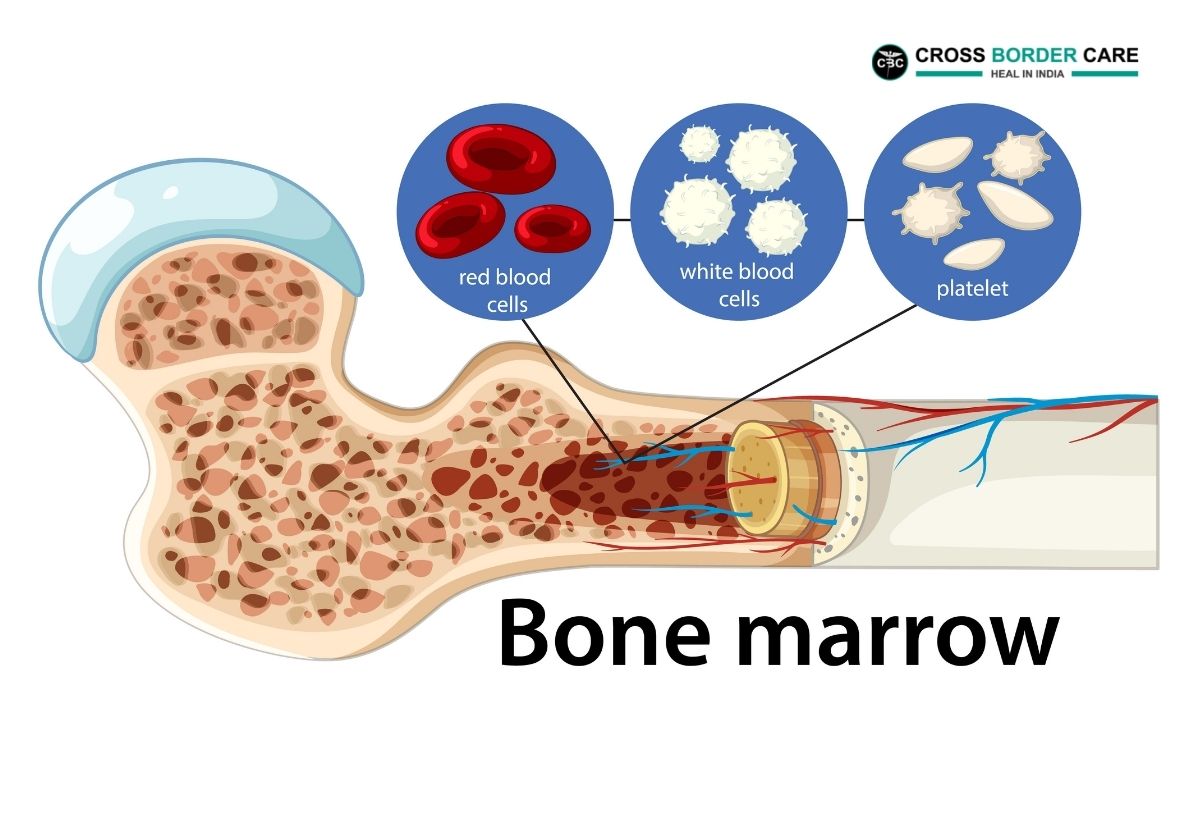
The real work begins after the infusion, when the transplanted stem cells travel naturally to the bone marrow and start producing healthy blood cells.
We are With You In This Journey
Travelling to another country for your child’s treatment can feel overwhelming, especially when you are already dealing with a serious medical condition. At Cross Border Care, our role is much more than simply booking a hospital appointment. We become your dedicated healthcare partner before, during, and even after your child’s treatment at Indraprastha Apollo Hospital Delhi.
Our team works closely with Indraprastha Apollo Hospital Delhi to ensure that every step of your medical journey is well planned and stress-free.
We assist families with:
- Reviewing your child’s medical reports before travel
- Arranging online consultations with Apollo’s paediatric bone marrow transplant specialists
- Providing a personalised treatment plan and estimated cost
- Medical visa guidance and invitation letters
- Scheduling hospital appointments and admission
- Airport pickup and local transportation
- Hotel or serviced apartment arrangements for parents
- Language and treatment coordination whenever required
- Regular communication with the treating doctors
- Follow-up consultations after returning to Tanzania
Our dedicated coordinators remain available throughout your stay in India, ensuring you always have someone to guide you whenever you need assistance.
Whether it is your first visit to India or you simply need help understanding the treatment process, Cross Border Care is committed to making your child’s journey as safe, organised, and comfortable as possible.
Frequently Asked Questions
How long do we need to stay in India for a pediatric bone marrow transplant?
Most families stay in India for approximately 8 to 12 weeks. This includes pre-transplant investigations, the transplant procedure, hospital recovery, and follow-up visits before doctors allow your child to travel home.
Can one parent stay with the child during treatment?
Yes. In most cases, Indraprastha Apollo Hospital Delhi allows one parent or guardian to stay with the child throughout the hospital stay. Parents also receive guidance on infection prevention and daily care.
Is a bone marrow transplant a surgery?
No. A bone marrow transplant is not a surgical operation. Healthy stem cells are infused into the bloodstream through a central line, similar to receiving a blood transfusion.
Will my child lose their hair during treatment?
Hair loss commonly occurs because of the high-dose chemotherapy given before the transplant. Hair usually begins to grow back gradually after treatment is completed.
Will my child feel pain during the transplant?
The stem cell infusion itself is generally painless. However, children may experience temporary side effects from chemotherapy, such as tiredness, nausea, mouth ulcers, or fever, which are managed by the medical team.
July 22, 2026