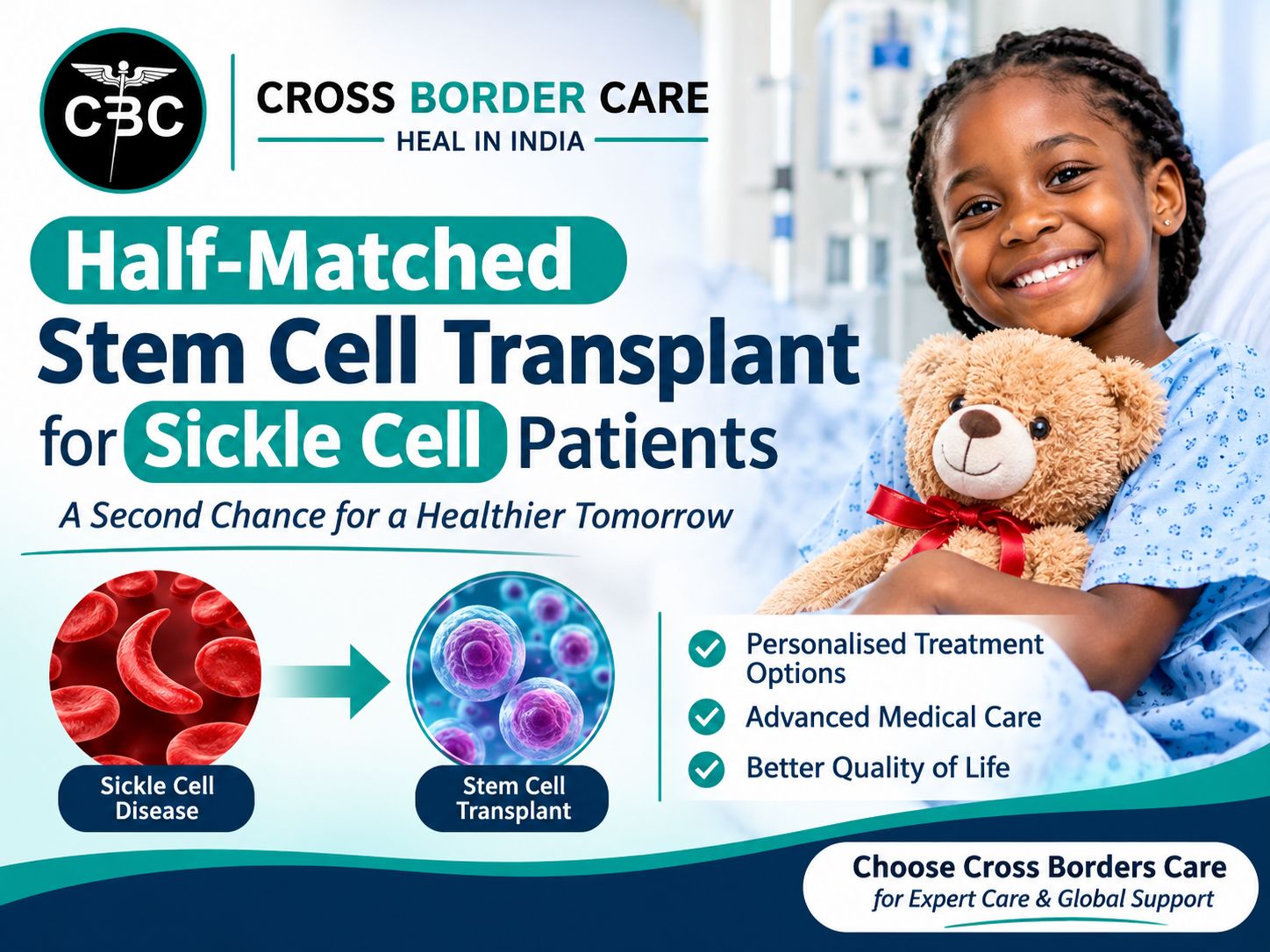
For Nigerian families living with sickle cell disease (SCD), finding a suitable stem cell donor can be one of the biggest challenges. A fully matched sibling donor is often preferred, but many patients do not have one.
Fortunately, half-matched stem cell transplantation, medically known as haploidentical hematopoietic stem cell transplantation (HSCT), offers another potential curative treatment option.
Both Nigeria and India provide bone marrow transplantation services. However, Nigeria does not offer half-matched stem cell transplantation, which is why Nigerian patients should come to India for it.
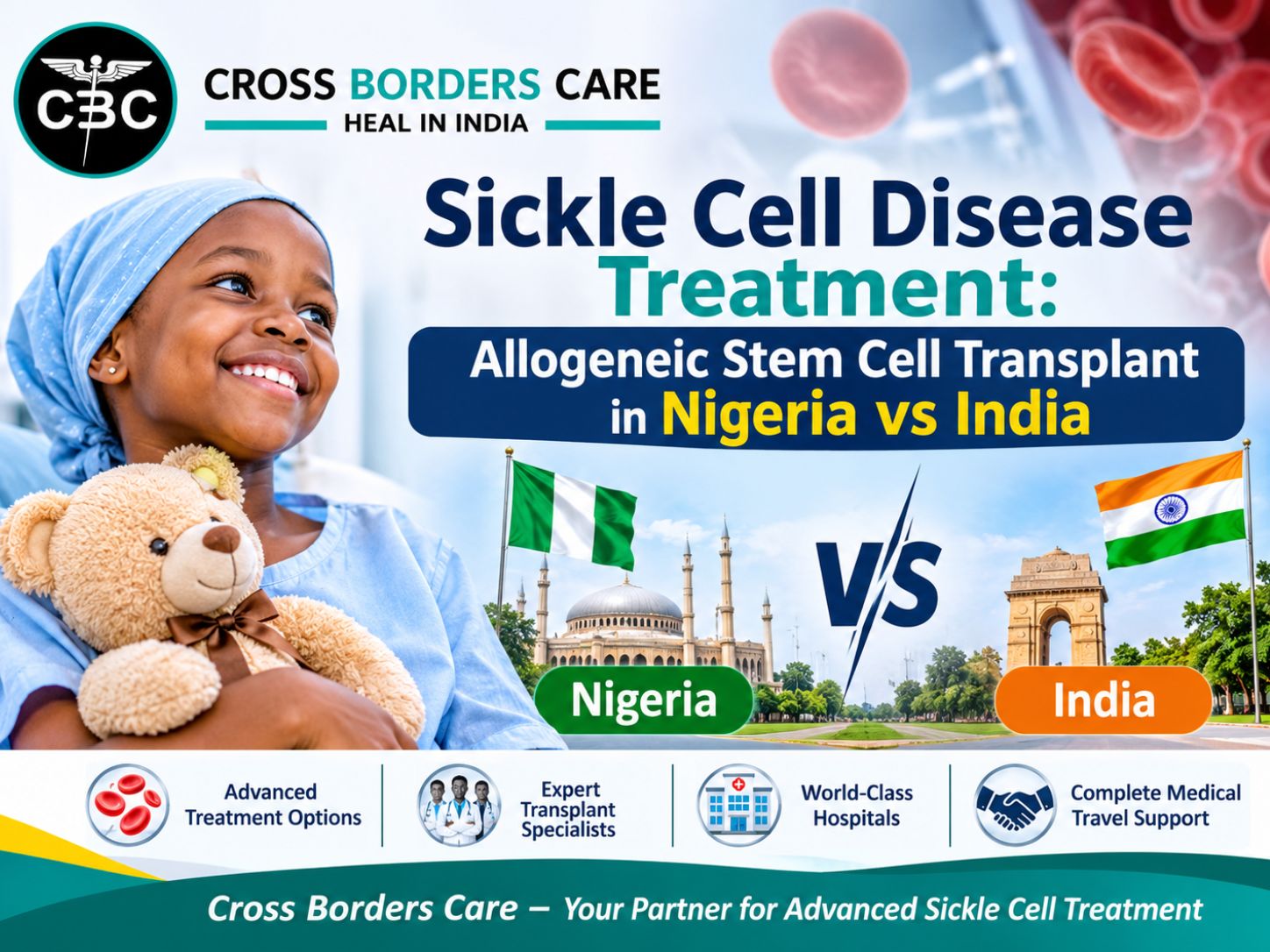
This guide explains the differences between half-matched stem cell transplant in India vs Nigeria, including hospitals, doctors, success rates, treatment costs and how Cross Border Care (CBC) can help patients access care.
What Is a Half-Matched Stem Cell Transplant for Sickle Cell Disease?
A half-matched stem cell transplant uses healthy blood-forming stem cells from a family donor who shares approximately 50% of the patient’s HLA markers. Potential donors include a biological parent, child or sibling.
The procedure involves:
- HLA typing to identify a suitable donor.
- Medical evaluation of the patient and donor.
- Conditioning treatment to prepare the patient’s bone marrow.
- Infusion of donor stem cells.
- Monitoring for engraftment, infections and graft-versus-host disease (GVHD).
A successful transplant can establish healthy red blood cell production and potentially cure sickle cell disease.
Half-Matched Stem Cell Transplant in Nigeria: What Is Available?
Nigeria has made important progress in curative sickle cell treatment. The Lagos University Teaching Hospital (LUTH) and Sickle Cell Foundation Nigeria jointly established a bone marrow transplant programme, with patients beginning treatment in 2024. However, Nigeria has made little progress in half-matched stem cell transplants.
Which country is better? India may offer more choices for complex haploidentical transplantation, particularly when a family needs a second opinion or a specialised transplant protocol.
India vs Nigeria: At a Glance
| Availability of half matched | No | Multiple established BMT centres |
| Hospitals | Lagos University Teaching Hospital (LUTH), Lagos, which runs a BMT centre with Sickle Cell Foundation Nigeria (SCFN). The first transplants took place in September 2024, using stem cells from family donors. Half matched options are not available | Indraprastha Apollo Hospitals, New Delhi: more than 215 bone marrow transplants for sickle cell disease, including haploidentical transplants. Fortis Memorial Research Institute, Gurugram: a decade-long paediatric sickle cell study reporting 78% success with half-matched family donor transplants.Rainbow Children’s Hospital (including Madhukar Rainbow, Delhi): paediatric BMT unit. |
| Half-matched transplant | Requires centre-specific confirmation | Available at specialised hospitals |
| Donor testing | Available through selected programmes | HLA typing and donor evaluation |
| Specialist experience | Developing local programmes | Published haploidentical SCD experience |
| International patient support | Mainly domestic pathways | Dedicated international patient departments |
| Follow-up | Easier for Nigerian residents | Requires coordination after returning home |
Best Doctors and Hospitals for Half-Matched Stem Cell Transplant in India
Dr Gaurav Kharya – Indraprastha Apollo Hospital, New Delhi
Dr Gaurav Kharya is a paediatric haematology and bone marrow transplant specialist with international fellowship training. He has published research on haploidentical transplantation for sickle cell disease, including the APOLLO protocol, designed to improve transplant outcomes.
Dr Rahul Bhargava – Fortis Memorial Research Institute, Gurugram
Dr Rahul Bhargava is Principal Director and Chief of Haematology, Hemato-Oncology and Bone Marrow Transplant at Fortis. His team published a 2026 study involving 14 adult sickle cell patients, including five who received half-matched transplants.
Dr Vikas Dua – Fortis Memorial Research Institute, Gurugram
Dr Vikas Dua holds MBBS, MD (Paediatrics) and FNB (Paediatric Haematology-Oncology) qualifications, with additional paediatric BMT fellowship training in Singapore. His expertise includes complex paediatric and haploidentical transplantation.
Half-Matched Stem Cell Transplant Cost in India vs Nigeria
Treatment costs depend on the hospital, patient age, donor testing, conditioning medicines, hospital stay and complications.
| Country | Cost information |
| India | Published Indian HSCT budget estimates include approximately ₹14 lakh for a transplant, but complex half-matched procedures may cost substantially more |
| Nigeria | No reliable standardised national price for haploidentical SCD transplantation is publicly established |
Indian hospital quotations should include donor evaluation, medicines, isolation, infection management and follow-up.
What Is the Success Rate of Half-Matched Transplant for Sickle Cell Disease?
Outcomes vary significantly by age, medical condition and transplant protocol.
- A 2026 Indian study at Fortis reported 80% overall survival among five adult haploidentical transplant recipients. This is a small study and should not be treated as a guaranteed hospital success rate.
- A separate clinical trial reported approximately 90% overall survival at four years among 22 half-matched transplant recipients.
Possible complications include graft rejection, GVHD, serious infections and transplant-related mortality.
How Does Cross Border Care Connect Nigerian Patients With Indian Hospitals and Doctors?
Cross Border Care (CBC) helps international patients explore suitable treatment options in India.
CBC can assist with:
- Medical report review: Coordinating specialist evaluation of sickle cell history, organ function and donor information.
- Doctor and hospital coordination: Helping patients request consultations and treatment opinions from appropriate BMT teams.
- Cost estimates: Obtaining hospital quotations and explaining expected expenses.
- Medical visa assistance: Supporting documentation and travel planning.
- Accommodation and local assistance: Helping patients and accompanying donors plan their stay.
- Follow-up coordination: Supporting communication with the treating hospital after patients return to Nigeria.
The hospital’s transplant team determines eligibility, treatment protocol and medical decisions.
FAQ
Can a parent donate stem cells to a child with sickle cell disease?
Yes. A biological parent is generally a potential half-matched donor, subject to medical testing.
Can half-matched stem cell transplantation cure sickle cell disease?
Yes, a successful transplant can provide a cure, although serious complications and graft failure remain possible.
Is India better than Nigeria for half-matched BMT?
India offers several experienced transplant teams, but treatment suitability depends on the individual hospital and patient.
How long must Nigerian patients stay in India?
Patients may need several months near the transplant centre for recovery and monitoring, depending on their clinical progress.
How can I contact a BMT specialist in India?
Cross Border Care can help patients request specialist consultations, hospital evaluations and treatment estimates.
Get Expert Assistance for Half-Matched Stem Cell Transplant in India
A half-matched donor can create a potential treatment opportunity for sickle cell patients who lack a fully matched sibling.
Contact Cross Border Care to explore specialist consultations, hospital options and personalised treatment estimates in India. CBC helps Nigerian families navigate the process, while qualified transplant specialists assess whether the procedure is appropriate.
November 10, 2026