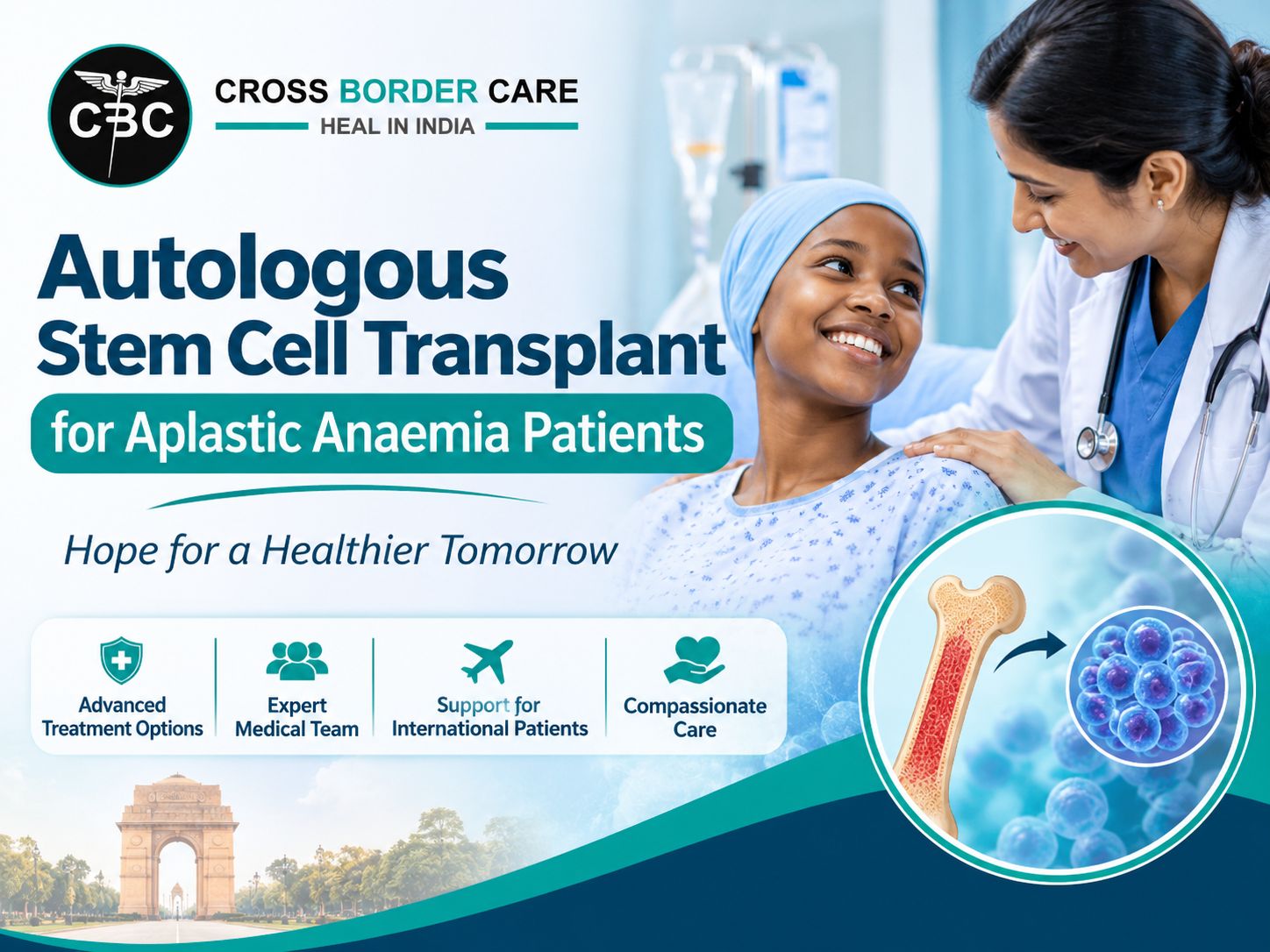
Aplastic anaemia is a rare but serious blood disorder in which the bone marrow fails to produce enough red blood cells, white blood cells and platelets. Patients may experience severe fatigue, frequent infections, unexplained bruising and excessive bleeding.
For families in Nigeria exploring treatment abroad, an important question is whether an autologous stem cell transplant for aplastic anemia can provide a cure.
The answer is no. Autologous stem cell transplantation is not an established curative treatment for aplastic anemia. Instead, eligible patients with severe disease may benefit from an allogeneic stem cell transplant using healthy donor cells.
India offers access to specialised haematology and bone marrow transplant centres, making it an option for Nigerian patients seeking further evaluation and treatment.
Autologous vs Allogeneic Stem Cell Transplant for Aplastic Anaemia
Understanding the difference between these procedures is essential.
| Autologous Stem Cell Transplant | Allogeneic Stem Cell Transplant |
| Uses the patient’s own stem cells | Uses healthy stem cells from a donor |
| Does not correct the underlying marrow failure | Can restore healthy blood cell production |
| Not an established cure for aplastic anaemia | Potentially curative for eligible patients |
| No donor matching required | Requires donor compatibility assessment |
For severe aplastic anaemia, allogeneic transplantation—not autologous transplantation—is the established curative transplant approach.
Aplastic Anaemia Treatment in Nigeria vs India
Treatment availability depends on the hospital, medical expertise and the patient’s condition.
| Factor | Nigeria | India |
| Diagnosis | Available at specialist haematology centres | Available at specialist hospitals |
| Blood transfusions | Available, depending on facility and supply | Available at major tertiary hospitals |
| Immunosuppressive therapy | Availability varies | Offered at specialist centres |
| Allogeneic transplant | Limited specialised availability | Multiple established transplant programmes |
| Matched unrelated or half-matched donor options | Must be confirmed with individual centres | Offered at selected experienced centres |
| Post-transplant care | Depends on centre resources | Dedicated transplant units at major hospitals |
Nigeria has developing transplant services, but access to specialised donor searches, infection management and long-term transplant support may be limited in some facilities.
India provides additional treatment choices for patients who require complex donor matching or specialist transplant evaluation.
What Are the Best Treatment Options for Aplastic Anaemia?
Treatment depends on disease severity, age, general health and donor availability.
Allogeneic Stem Cell Transplant
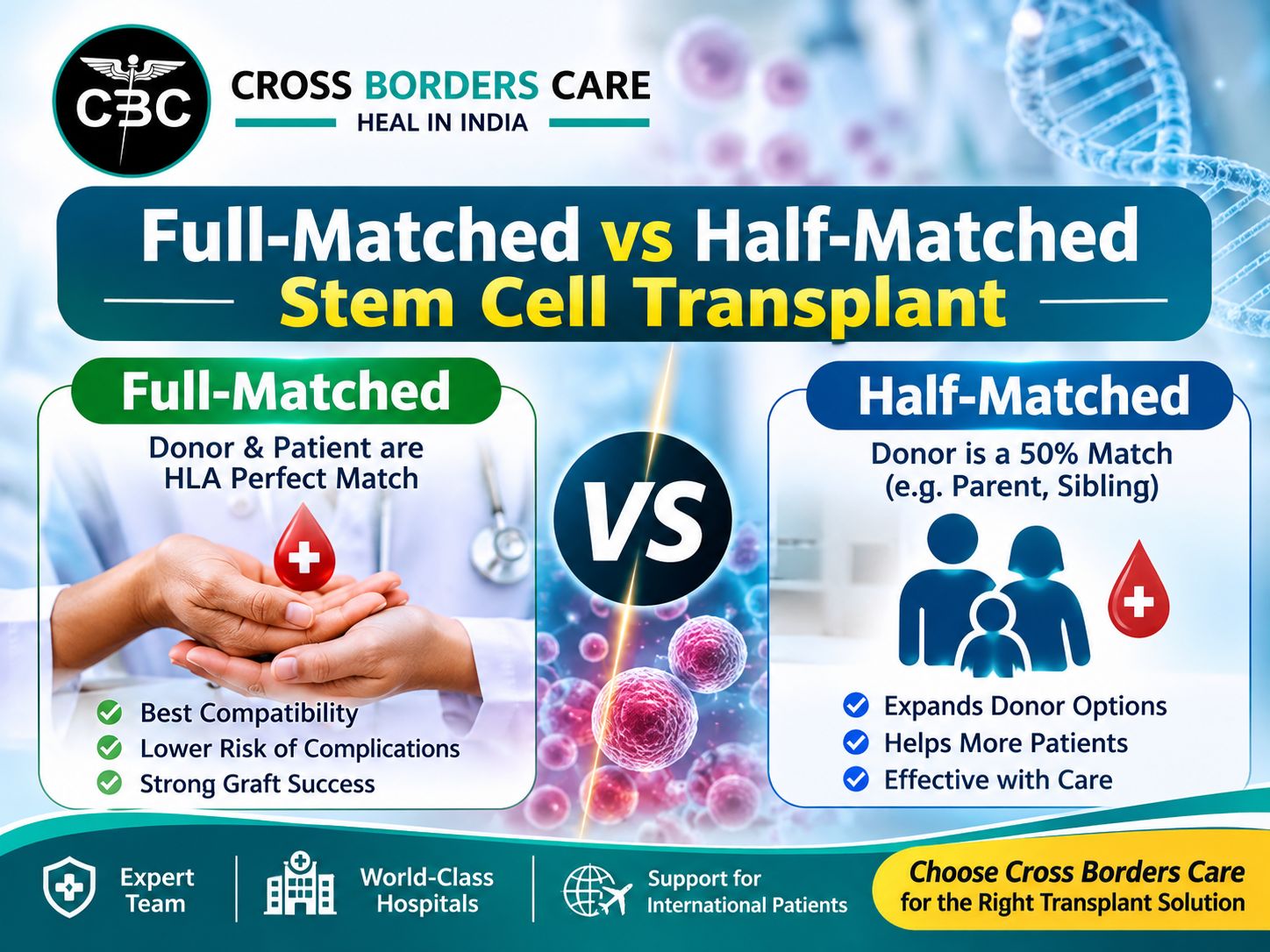
Healthy stem cells from a compatible donor are infused after a conditioning regimen. The aim is to establish functioning donor marrow.Possible donors include matched siblings, matched unrelated donors and, in selected cases, half-matched family members.
Immunosuppressive Therapy
Patients who are not suitable for immediate transplantation may receive:
- Anti-thymocyte globulin (ATG)
- Cyclosporine
- Eltrombopag
These medicines can improve blood cell production in patients with acquired aplastic anaemia.
Supportive Treatment
Blood and platelet transfusions, infection prevention and appropriate antimicrobial treatment help manage complications.
Best Hospitals in India for Aplastic Anaemia Treatment
Nigerian patients can consider specialist evaluation at established Indian hospitals, including:
1. Indraprastha Apollo Hospitals, New Delhi
Provides haematology services, bone marrow transplantation and multidisciplinary care.
2. Medanta – The Medicity, Gurugram
Offers specialist haematology, stem cell transplantation and critical care support.
3. Fortis Memorial Research Institute, Gurugram
Has haematology and bone marrow transplant services for complex blood disorders.
4. Max Super Speciality Hospital, Saket, New Delhi
Provides haematology consultation, transplant evaluation and supportive care.
The final hospital should be selected after confirming aplastic anaemia experience, donor options, transplant availability and a personalised treatment plan.
Cost of Aplastic Anaemia Stem Cell Transplant: India vs Nigeria
There is no applicable curative autologous transplant cost for aplastic anaemia because it is not a recommended treatment.
For allogeneic transplantation in India, historical published estimates have varied substantially:
| Transplant type | Published Indian cost estimates |
| Matched related donor | ₹11–17 lakh |
| Matched unrelated donor | ₹21–28 lakh, excluding graft cost |
| Half-matched donor | ₹21–28 lakh |
These are historical hospitalisation estimates, not verified 2026 quotations. Actual costs may be considerably higher depending on complications, donor testing, medicines and follow-up.
Nigeria: A reliable nationwide transplant price cannot be stated without current hospital quotations. Families should request a detailed estimate from any Nigerian centre offering the required procedure.
How Can Cross Border Care Help Nigerian Patients?
Cross Border Care (CBC) assists international patients seeking specialist medical evaluation and treatment in India.
For Nigerian patients with aplastic anaemia, CBC can help coordinate:
- Medical report review by Indian haematology specialists.
- Hospital and transplant-team consultations.
- Donor-matching evaluation and treatment estimates.
- Medical visa documentation and travel planning.
- Accommodation and hospital admission coordination.
- Follow-up planning after treatment.
CBC helps patients navigate the process, while medical decisions remain with the treating specialists.
Frequently Asked Questions
1. Can autologous stem cell transplant cure aplastic anaemia?
No. Autologous transplantation using the patient’s own unmodified stem cells is not an established cure for aplastic anaemia.
2. Can a half-matched donor be used for aplastic anaemia?
Yes, in selected patients. However, a half-matched transplant is not automatically the preferred first treatment.
3. Is bone marrow transplant available in Nigeria?
Some Nigerian centres have developed transplant capabilities, but availability for aplastic anaemia and specific donor types must be verified directly.
4. What is the success rate of aplastic anaemia transplantation in India?
Outcomes depend on patient age, donor matching, infections and transplant experience. No single success rate applies to every patient or hospital.
5. Is India a suitable treatment destination for Nigerian patients?
India may be suitable for patients needing specialist evaluation, donor searches or transplantation unavailable locally. The decision should follow a medical assessment.
Conclusion
For patients with severe aplastic anaemia, allogeneic stem cell transplantation is a potentially curative option, whereas autologous transplantation is not an established cure.
Nigerian families considering treatment in India should compare hospitals based on specialist expertise, donor availability, infection-control facilities and follow-up support rather than cost alone.
Contact Cross Border Care to explore specialist consultations and personalised treatment planning for aplastic anaemia in India.
November 14, 2026