For patients living with sickle cell disease (SCD), a stem cell transplant offers the possibility of a cure. However, finding a suitable donor remains one of the biggest challenges, especially for families in Nigeria.
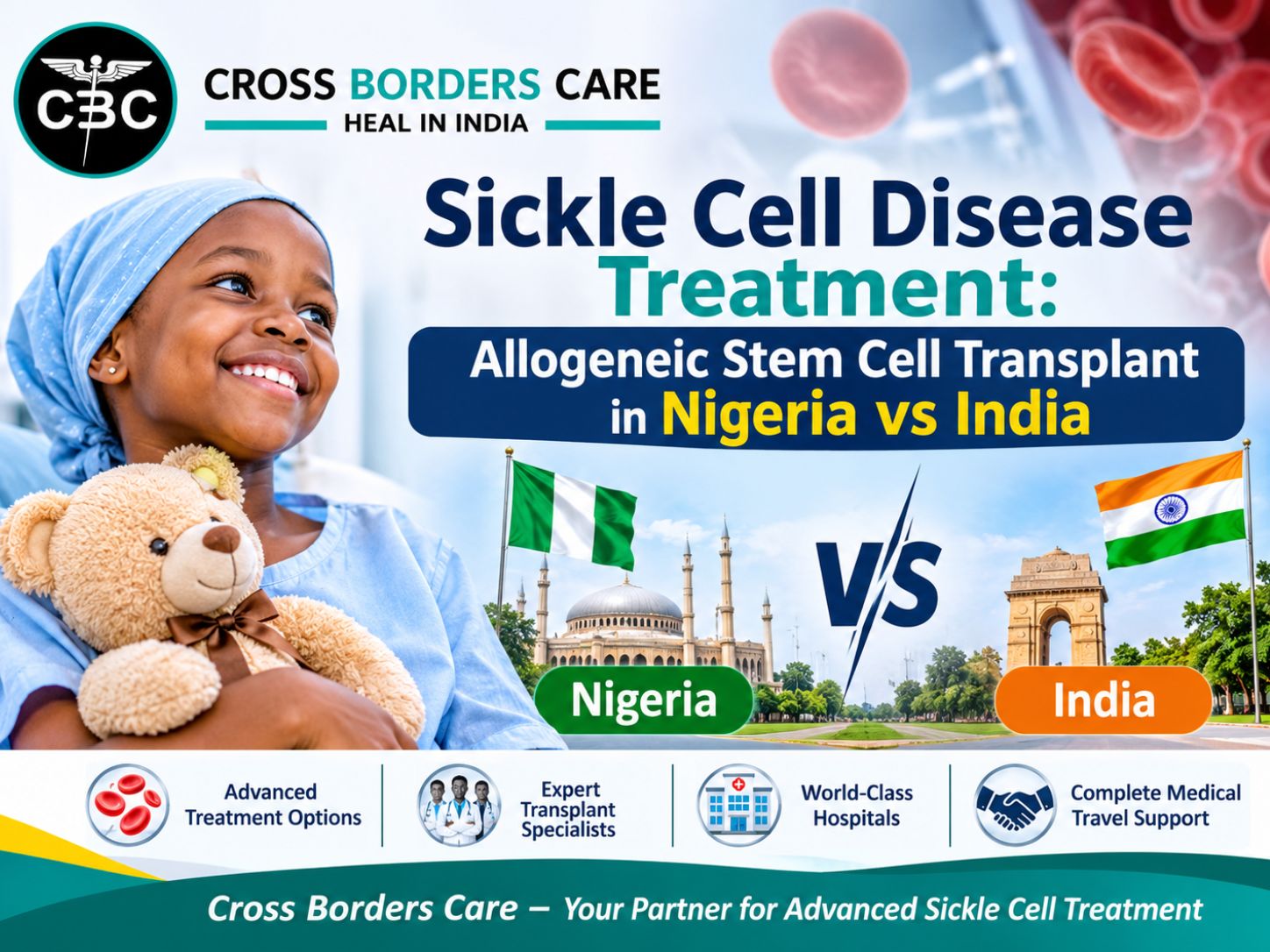
India offers both fully matched and half-matched stem cell transplant options at specialised hospitals. Nigeria also performs stem cell transplants, but access to experienced teams, alternative donor procedures and comprehensive supportive care is more limited.
This guide explains the differences, hospital availability, treatment outcomes and how Cross Border Care helps Nigerian patients explore transplant options in India.
What Is a Full-Matched Stem Cell Transplant?
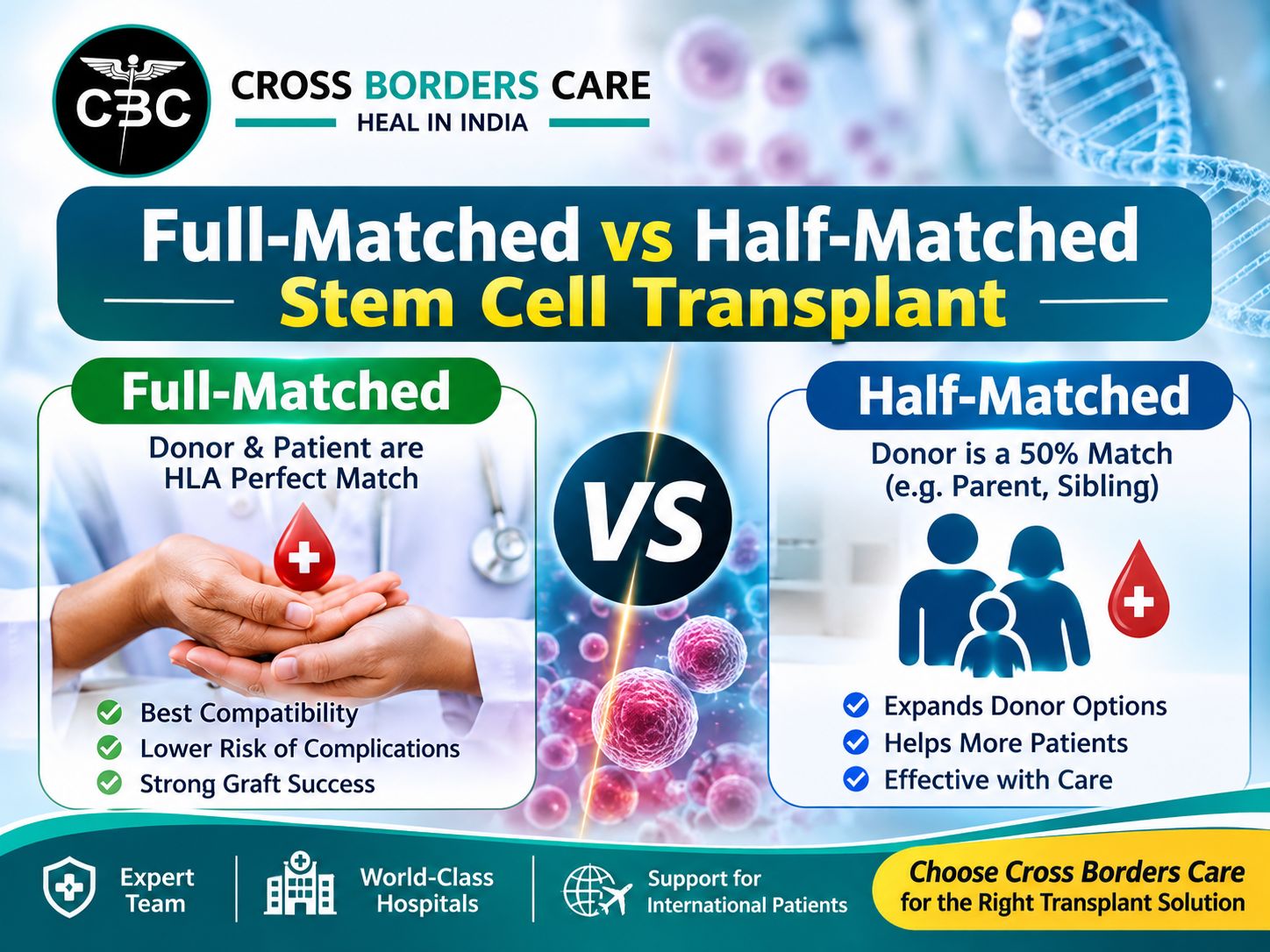
A fully matched stem cell transplant uses healthy blood-forming stem cells from a donor whose human leukocyte antigen (HLA) markers closely match the patient’s.
A fully matched sibling is generally the preferred donor for eligible sickle cell patients because of established outcomes and a lower risk of certain complications compared with alternative donors. However, not every patient has a fully matched sibling.
What Is a Half-Matched Stem Cell Transplant?
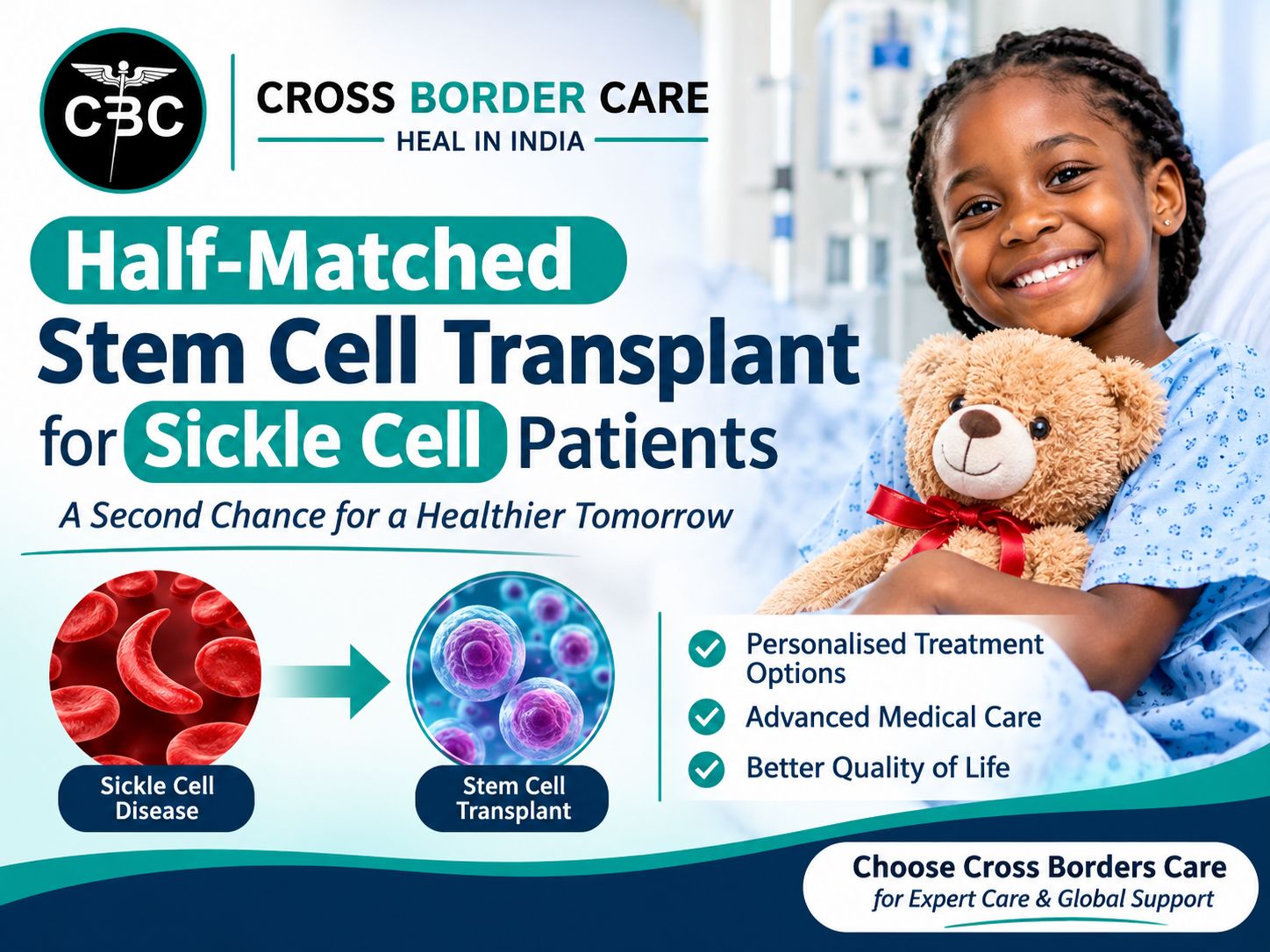
A half-matched, or haploidentical, stem cell transplant uses stem cells from a family member who shares about half of the patient’s HLA markers.
Potential donors include:
- Mother or father
- Biological children
- Brothers or sisters
This option is particularly important for sickle cell patients who do not have a fully matched sibling.
Half-matched transplants require specialised protocols to reduce graft rejection and graft-versus-host disease (GVHD). They may be considered for children and adults after a detailed medical evaluation.
Full-Matched vs Half-Matched Stem Cell Transplant: Key Differences
| Factor | Full-Matched Transplant | Half-Matched Transplant |
| Donor | Closely HLA-matched donor | Partially matched family donor |
| Availability | Limited by donor compatibility | Expands family donor options |
| GVHD risk | Generally lower with matched siblings | May be higher, depending on protocol |
| Graft rejection | Possible | An important concern |
| Treatment complexity | Established protocols | Requires specialised expertise |
| Curative potential | Yes | Yes, in selected patients |
Both procedures carry significant risks, including infection, graft failure, infertility and transplant-related mortality.
Stem Cell Transplant for Sickle Cell Disease in Nigeria
Nigeria has established stem cell transplant programmes, although access remains limited.
Hospitals with documented transplant experience include:
Lagos University Teaching Hospital (LUTH), Lagos
In collaboration with the Sickle Cell Foundation Nigeria, LUTH established a dedicated bone marrow transplant programme. Its first patients began transplantation in August 2024.
University of Benin Teaching Hospital (UBTH), Benin City
UBTH performed Nigeria’s first reported stem cell transplant for sickle cell disease in 2011 using a fully matched sibling donor.
Celltek Healthcare Medical Centre, Benin City
Celltek has documented experience with fully matched and a small number of haploidentical transplants.
What Are the Limitations in Nigeria?
Although transplant services are developing, important challenges remain:
- Limited alternative donor programmes: Half-matched transplantation is not available in Nigeria.
- Limited specialist availability: Experienced multidisciplinary transplant teams are concentrated in relatively few centres.
- Supportive care gaps: Access to specialised infection monitoring, blood products and advanced diagnostics varies.
- Infrastructure limitations: Advanced transplant facilities and long-term follow-up services are not equally accessible.
These limitations do not mean Nigeria lacks qualified doctors or transplant services. They highlight the importance of evaluating each centre individually.
Stem Cell Transplant for Sickle Cell Disease in India
India has specialised bone marrow transplant hospitals offering matched-sibling and haploidentical transplantation.
Some established hospitals include:
| Hospital | Location |
| Fortis Memorial Research Institute | Gurugram |
| Indraprastha Apollo Hospitals | New Delhi |
| Medanta – The Medicity | Gurugram |
| Max Super Speciality Hospital | Saket, Delhi |
Patients should confirm the hospital’s current experience specifically with sickle cell disease and the proposed donor type.
What Is the Success Rate?
Transplant outcomes depend on age, organ health, donor compatibility, conditioning regimen and hospital experience.
A 2026 study from Fortis Memorial Research Institute involving 14 adults with sickle cell disease reported:
- 78.6% overall survival
- 71.4% event-free survival
The study included nine matched-sibling and five half-matched transplants.These figures represent one small patient group, not a guaranteed success rate for all Indian hospitals.
Top 3 Stem Cell Transplant Doctors in India for Sickle Cell Disease
India has experienced haematologists and bone marrow transplant specialists who perform fully matched and half-matched stem cell transplants. Nigerian patients can consult the following specialists to understand their treatment options.
Dr Gaurav Kharya – Indraprastha Apollo Hospital, New Delhi
Qualifications: MBBS, DCH, DNB (Paediatrics), Fellowship in Paediatric Haematology and Bone Marrow Transplant.
Dr Gaurav Kharya is a paediatric haematology and bone marrow transplant specialist with extensive experience treating sickle cell disease in children. His expertise includes matched-sibling, unrelated-donor and haploidentical stem cell transplantation.
He has also contributed to published research on sickle cell disease transplantation.
Best suited for: Children with sickle cell disease who require evaluation for a fully matched or half-matched donor transplant.
Dr Rahul Bhargava – Fortis Memorial Research Institute, Gurugram
Qualifications: MBBS, MD (Medicine), DM (Clinical Haematology), AIIMS New Delhi.
Dr Rahul Bhargava is Principal Director and Chief of Haematology, Hemato-Oncology and Bone Marrow Transplant at Fortis Memorial Research Institute. He has experience in allogeneic and haploidentical stem cell transplantation for complex blood disorders, including sickle cell disease. His expertise includes donor selection, transplant planning and management of transplant-related complications.
Best suited for: Adult sickle cell patients requiring assessment for matched or half-matched stem cell transplantation.
Dr Vikas Dua – Fortis Memorial Research Institute, Gurugram
Qualifications: MBBS, MD (Paediatrics), FNB (Paediatric Haematology-Oncology), Fellowship in Paediatric Bone Marrow Transplantation, Singapore.
Dr Vikas Dua is Principal Director and Head of Paediatric Haematology, Haemato-Oncology and Bone Marrow Transplant at Fortis Memorial Research Institute.
He specialises in bone marrow transplantation for children with blood disorders. His experience includes complex paediatric transplants and haploidentical donor procedures.
Best suited for: Children with sickle cell disease who need specialist evaluation for alternative donor transplantation.
India vs Nigeria: Which Is Better for Sickle Cell Transplantation?
Nigeria may be a suitable option when a patient has an eligible donor and can access an experienced transplant programme. India may offer additional options when a fully matched donor is unavailable, or when a patient needs a centre with extensive alternative-donor transplant experience.
The decision should consider the transplant team’s experience, supportive care facilities, medical risks, total cost and follow-up requirements.
How Does Cross Border Care Help Nigerian Patients?
Cross Border Care assists Nigerian families seeking specialised stem cell transplant treatment in India.
Our coordination services include:
- Reviewing medical reports and previous treatment records.
- Connecting patients with suitable transplant hospitals and specialists.
- Coordinating donor compatibility testing and specialist consultations.
- Obtaining hospital treatment plans and cost estimates.
- Assisting with medical visas, travel and accommodation.
- Coordinating post-treatment follow-up with the treating hospital
Contact Cross Border Care to explore full-matched and half-matched stem cell transplant options in India.
FAQ
Can sickle cell disease be cured with a half-matched transplant?
Yes. Haploidentical transplantation can provide a cure in selected patients, but graft rejection and other complications remain important risks.
Is half-matched stem cell transplantation available in Nigeria?
Yes, some procedures have been reported. However, availability remains limited and must be confirmed with the treating centre.
Can children undergo half-matched stem cell transplantation?
Yes. Children may be eligible depending on disease severity, donor availability and overall health.
Is a fully matched transplant better than a half-matched transplant?
A fully matched sibling donor is generally preferred when available, but the best option depends on individual circumstances.
Can Nigerian patients travel to India for a stem cell transplant?
Yes. Eligible patients can seek specialist evaluation in India. Cross Border Care can help coordinate consultations, hospital estimates and travel arrangements.
November 13, 2026