Categories
Brain Surgery

Full-Matched vs Half-Matched Stem Cell Transplant for Sickle Cell Patients: India vs Nigeria

For patients living with sickle cell disease (SCD), a stem cell transplant offers the possibility of a cure. However, finding a suitable donor remains one of the biggest challenges, especially for families in Nigeria.

India offers both fully matched and half-matched stem cell transplant options at specialised hospitals. Nigeria also performs stem cell transplants, but access to experienced teams, alternative donor procedures and comprehensive supportive care is more limited.

This guide explains the differences, hospital availability, treatment outcomes and how Cross Border Care helps Nigerian patients explore transplant options in India.

What Is a Full-Matched Stem Cell Transplant?

A fully matched stem cell transplant uses healthy blood-forming stem cells from a donor whose human leukocyte antigen (HLA) markers closely match the patient’s.

A fully matched sibling is generally the preferred donor for eligible sickle cell patients because of established outcomes and a lower risk of certain complications compared with alternative donors. However, not every patient has a fully matched sibling.

What Is a Half-Matched Stem Cell Transplant?

A half-matched, or haploidentical, stem cell transplant uses stem cells from a family member who shares about half of the patient’s HLA markers.

Potential donors include:

  • Mother or father
  • Biological children
  • Brothers or sisters

This option is particularly important for sickle cell patients who do not have a fully matched sibling.

Half-matched transplants require specialised protocols to reduce graft rejection and graft-versus-host disease (GVHD). They may be considered for children and adults after a detailed medical evaluation.

Full-Matched vs Half-Matched Stem Cell Transplant: Key Differences

Factor Full-Matched Transplant Half-Matched Transplant
Donor Closely HLA-matched donor Partially matched family donor
Availability Limited by donor compatibility Expands family donor options
GVHD risk Generally lower with matched siblings May be higher, depending on protocol
Graft rejection Possible An important concern
Treatment complexity Established protocols Requires specialised expertise
Curative potential Yes Yes, in selected patients

Both procedures carry significant risks, including infection, graft failure, infertility and transplant-related mortality.

Stem Cell Transplant for Sickle Cell Disease in Nigeria

Nigeria has established stem cell transplant programmes, although access remains limited.

Hospitals with documented transplant experience include:

Lagos University Teaching Hospital (LUTH), Lagos

In collaboration with the Sickle Cell Foundation Nigeria, LUTH established a dedicated bone marrow transplant programme. Its first patients began transplantation in August 2024.

University of Benin Teaching Hospital (UBTH), Benin City

UBTH performed Nigeria’s first reported stem cell transplant for sickle cell disease in 2011 using a fully matched sibling donor.

Celltek Healthcare Medical Centre, Benin City

Celltek has documented experience with fully matched and a small number of haploidentical transplants.

What Are the Limitations in Nigeria?

Although transplant services are developing, important challenges remain:

  • Limited alternative donor programmes: Half-matched transplantation is not available in Nigeria.
  • Limited specialist availability: Experienced multidisciplinary transplant teams are concentrated in relatively few centres.
  • Supportive care gaps: Access to specialised infection monitoring, blood products and advanced diagnostics varies.
  • Infrastructure limitations: Advanced transplant facilities and long-term follow-up services are not equally accessible.

These limitations do not mean Nigeria lacks qualified doctors or transplant services. They highlight the importance of evaluating each centre individually.

Stem Cell Transplant for Sickle Cell Disease in India

India has specialised bone marrow transplant hospitals offering matched-sibling and haploidentical transplantation.

Some established hospitals include:


Hospital Location
Fortis Memorial Research Institute Gurugram
Indraprastha Apollo Hospitals New Delhi
Medanta – The Medicity Gurugram
Max Super Speciality Hospital Saket, Delhi

Patients should confirm the hospital’s current experience specifically with sickle cell disease and the proposed donor type.

What Is the Success Rate?

Transplant outcomes depend on age, organ health, donor compatibility, conditioning regimen and hospital experience.

A 2026 study from Fortis Memorial Research Institute involving 14 adults with sickle cell disease reported:

  • 78.6% overall survival
  • 71.4% event-free survival

The study included nine matched-sibling and five half-matched transplants.These figures represent one small patient group, not a guaranteed success rate for all Indian hospitals.

Top 3 Stem Cell Transplant Doctors in India for Sickle Cell Disease

India has experienced haematologists and bone marrow transplant specialists who perform fully matched and half-matched stem cell transplants. Nigerian patients can consult the following specialists to understand their treatment options.

Dr Gaurav Kharya – Indraprastha Apollo Hospital, New Delhi

Qualifications: MBBS, DCH, DNB (Paediatrics), Fellowship in Paediatric Haematology and Bone Marrow Transplant.

Dr Gaurav Kharya is a paediatric haematology and bone marrow transplant specialist with extensive experience treating sickle cell disease in children. His expertise includes matched-sibling, unrelated-donor and haploidentical stem cell transplantation.

He has also contributed to published research on sickle cell disease transplantation.

Best suited for: Children with sickle cell disease who require evaluation for a fully matched or half-matched donor transplant.

Dr Rahul Bhargava – Fortis Memorial Research Institute, Gurugram

Qualifications: MBBS, MD (Medicine), DM (Clinical Haematology), AIIMS New Delhi.

Dr Rahul Bhargava is Principal Director and Chief of Haematology, Hemato-Oncology and Bone Marrow Transplant at Fortis Memorial Research Institute. He has experience in allogeneic and haploidentical stem cell transplantation for complex blood disorders, including sickle cell disease. His expertise includes donor selection, transplant planning and management of transplant-related complications.

Best suited for: Adult sickle cell patients requiring assessment for matched or half-matched stem cell transplantation.

Dr Vikas Dua – Fortis Memorial Research Institute, Gurugram

Qualifications: MBBS, MD (Paediatrics), FNB (Paediatric Haematology-Oncology), Fellowship in Paediatric Bone Marrow Transplantation, Singapore.

Dr Vikas Dua is Principal Director and Head of Paediatric Haematology, Haemato-Oncology and Bone Marrow Transplant at Fortis Memorial Research Institute.

He specialises in bone marrow transplantation for children with blood disorders. His experience includes complex paediatric transplants and haploidentical donor procedures.

Best suited for: Children with sickle cell disease who need specialist evaluation for alternative donor transplantation.

India vs Nigeria: Which Is Better for Sickle Cell Transplantation?

Nigeria may be a suitable option when a patient has an eligible donor and can access an experienced transplant programme. India may offer additional options when a fully matched donor is unavailable, or when a patient needs a centre with extensive alternative-donor transplant experience.

The decision should consider the transplant team’s experience, supportive care facilities, medical risks, total cost and follow-up requirements.

How Does Cross Border Care Help Nigerian Patients?

Cross Border Care assists Nigerian families seeking specialised stem cell transplant treatment in India.

Our coordination services include:

  • Reviewing medical reports and previous treatment records.
  • Connecting patients with suitable transplant hospitals and specialists.
  • Coordinating donor compatibility testing and specialist consultations.
  • Obtaining hospital treatment plans and cost estimates.
  • Assisting with medical visas, travel and accommodation.
  • Coordinating post-treatment follow-up with the treating hospital

Contact Cross Border Care to explore full-matched and half-matched stem cell transplant options in India.

FAQ

 Can sickle cell disease be cured with a half-matched transplant?

Yes. Haploidentical transplantation can provide a cure in selected patients, but graft rejection and other complications remain important risks.

Is half-matched stem cell transplantation available in Nigeria?

Yes, some procedures have been reported. However, availability remains limited and must be confirmed with the treating centre.

Can children undergo half-matched stem cell transplantation?

Yes. Children may be eligible depending on disease severity, donor availability and overall health.

Is a fully matched transplant better than a half-matched transplant?

A fully matched sibling donor is generally preferred when available, but the best option depends on individual circumstances.

Can Nigerian patients travel to India for a stem cell transplant?

Yes. Eligible patients can seek specialist evaluation in India. Cross Border Care can help coordinate consultations, hospital estimates and travel arrangements.

 

Categories
Brain Surgery

Half-Matched Stem Cell Transplant for Sickle Cell Patients: India vs Nigeria

For Nigerian families living with sickle cell disease (SCD), finding a suitable stem cell donor can be one of the biggest challenges. A fully matched sibling donor is often preferred, but many patients do not have one.

Fortunately, half-matched stem cell transplantation, medically known as haploidentical hematopoietic stem cell transplantation (HSCT), offers another potential curative treatment option.

Both Nigeria and India provide bone marrow transplantation services. However, Nigeria does not offer half-matched stem cell transplantation, which is why Nigerian patients should come to India for it.

This guide explains the differences between half-matched stem cell transplant in India vs Nigeria, including hospitals, doctors, success rates, treatment costs and how Cross Border Care (CBC) can help patients access care.

What Is a Half-Matched Stem Cell Transplant for Sickle Cell Disease?

A half-matched stem cell transplant uses healthy blood-forming stem cells from a family donor who shares approximately 50% of the patient’s HLA markers. Potential donors include a biological parent, child or sibling.

The procedure involves:

  • HLA typing to identify a suitable donor.
  • Medical evaluation of the patient and donor.
  • Conditioning treatment to prepare the patient’s bone marrow.
  • Infusion of donor stem cells.
  • Monitoring for engraftment, infections and graft-versus-host disease (GVHD).

A successful transplant can establish healthy red blood cell production and potentially cure sickle cell disease.

Half-Matched Stem Cell Transplant in Nigeria: What Is Available?

Nigeria has made important progress in curative sickle cell treatment. The Lagos University Teaching Hospital (LUTH) and Sickle Cell Foundation Nigeria jointly established a bone marrow transplant programme, with patients beginning treatment in 2024. However, Nigeria has made little progress in half-matched stem cell transplants.

Which country is better? India may offer more choices for complex haploidentical transplantation, particularly when a family needs a second opinion or a specialised transplant protocol.

India vs Nigeria: At a Glance

Availability of half matched No Multiple established BMT centres
Hospitals Lagos University Teaching Hospital (LUTH), Lagos, which runs a BMT centre with Sickle Cell Foundation Nigeria (SCFN). The first transplants took place in September 2024, using stem cells from family donors. Half matched options are not available Indraprastha Apollo Hospitals, New Delhi: more than 215 bone marrow transplants for sickle cell disease, including haploidentical transplants.
Fortis Memorial Research Institute, Gurugram: a decade-long paediatric sickle cell study reporting 78% success with half-matched family donor transplants.Rainbow Children’s Hospital (including Madhukar Rainbow, Delhi): paediatric BMT unit.
Half-matched transplant Requires centre-specific confirmation Available at specialised hospitals
Donor testing Available through selected programmes HLA typing and donor evaluation
Specialist experience Developing local programmes Published haploidentical SCD experience
International patient support Mainly domestic pathways Dedicated international patient departments
Follow-up Easier for Nigerian residents Requires coordination after returning home


Best Doctors and Hospitals for Half-Matched Stem Cell Transplant in India

Dr Gaurav Kharya – Indraprastha Apollo Hospital, New Delhi

Dr Gaurav Kharya is a paediatric haematology and bone marrow transplant specialist with international fellowship training. He has published research on haploidentical transplantation for sickle cell disease, including the APOLLO protocol, designed to improve transplant outcomes.

Dr Rahul Bhargava – Fortis Memorial Research Institute, Gurugram

Dr Rahul Bhargava is Principal Director and Chief of Haematology, Hemato-Oncology and Bone Marrow Transplant at Fortis. His team published a 2026 study involving 14 adult sickle cell patients, including five who received half-matched transplants.

Dr Vikas Dua – Fortis Memorial Research Institute, Gurugram

Dr Vikas Dua holds MBBS, MD (Paediatrics) and FNB (Paediatric Haematology-Oncology) qualifications, with additional paediatric BMT fellowship training in Singapore. His expertise includes complex paediatric and haploidentical transplantation.

Half-Matched Stem Cell Transplant Cost in India vs Nigeria

Treatment costs depend on the hospital, patient age, donor testing, conditioning medicines, hospital stay and complications.


Country Cost information
India Published Indian HSCT budget estimates include approximately ₹14 lakh for a transplant, but complex half-matched procedures may cost substantially more
Nigeria No reliable standardised national price for haploidentical SCD transplantation is publicly established

Indian hospital quotations should include donor evaluation, medicines, isolation, infection management and follow-up.

What Is the Success Rate of Half-Matched Transplant for Sickle Cell Disease?

Outcomes vary significantly by age, medical condition and transplant protocol.

  • A 2026 Indian study at Fortis reported 80% overall survival among five adult haploidentical transplant recipients. This is a small study and should not be treated as a guaranteed hospital success rate.
  • A separate clinical trial reported approximately 90% overall survival at four years among 22 half-matched transplant recipients.

Possible complications include graft rejection, GVHD, serious infections and transplant-related mortality.

How Does Cross Border Care Connect Nigerian Patients With Indian Hospitals and Doctors?

Cross Border Care (CBC) helps international patients explore suitable treatment options in India.

CBC can assist with:

  • Medical report review: Coordinating specialist evaluation of sickle cell history, organ function and donor information.
  • Doctor and hospital coordination: Helping patients request consultations and treatment opinions from appropriate BMT teams.
  • Cost estimates: Obtaining hospital quotations and explaining expected expenses.
  • Medical visa assistance: Supporting documentation and travel planning.
  • Accommodation and local assistance: Helping patients and accompanying donors plan their stay.
  • Follow-up coordination: Supporting communication with the treating hospital after patients return to Nigeria.

The hospital’s transplant team determines eligibility, treatment protocol and medical decisions.

FAQ

Can a parent donate stem cells to a child with sickle cell disease?

Yes. A biological parent is generally a potential half-matched donor, subject to medical testing.

Can half-matched stem cell transplantation cure sickle cell disease?

Yes, a successful transplant can provide a cure, although serious complications and graft failure remain possible.

Is India better than Nigeria for half-matched BMT?

India offers several experienced transplant teams, but treatment suitability depends on the individual hospital and patient.

How long must Nigerian patients stay in India?

Patients may need several months near the transplant centre for recovery and monitoring, depending on their clinical progress.

How can I contact a BMT specialist in India?

Cross Border Care can help patients request specialist consultations, hospital evaluations and treatment estimates.

Get Expert Assistance for Half-Matched Stem Cell Transplant in India

A half-matched donor can create a potential treatment opportunity for sickle cell patients who lack a fully matched sibling.

Contact Cross Border Care to explore specialist consultations, hospital options and personalised treatment estimates in India. CBC helps Nigerian families navigate the process, while qualified transplant specialists assess whether the procedure is appropriate.

Categories
Brain Surgery

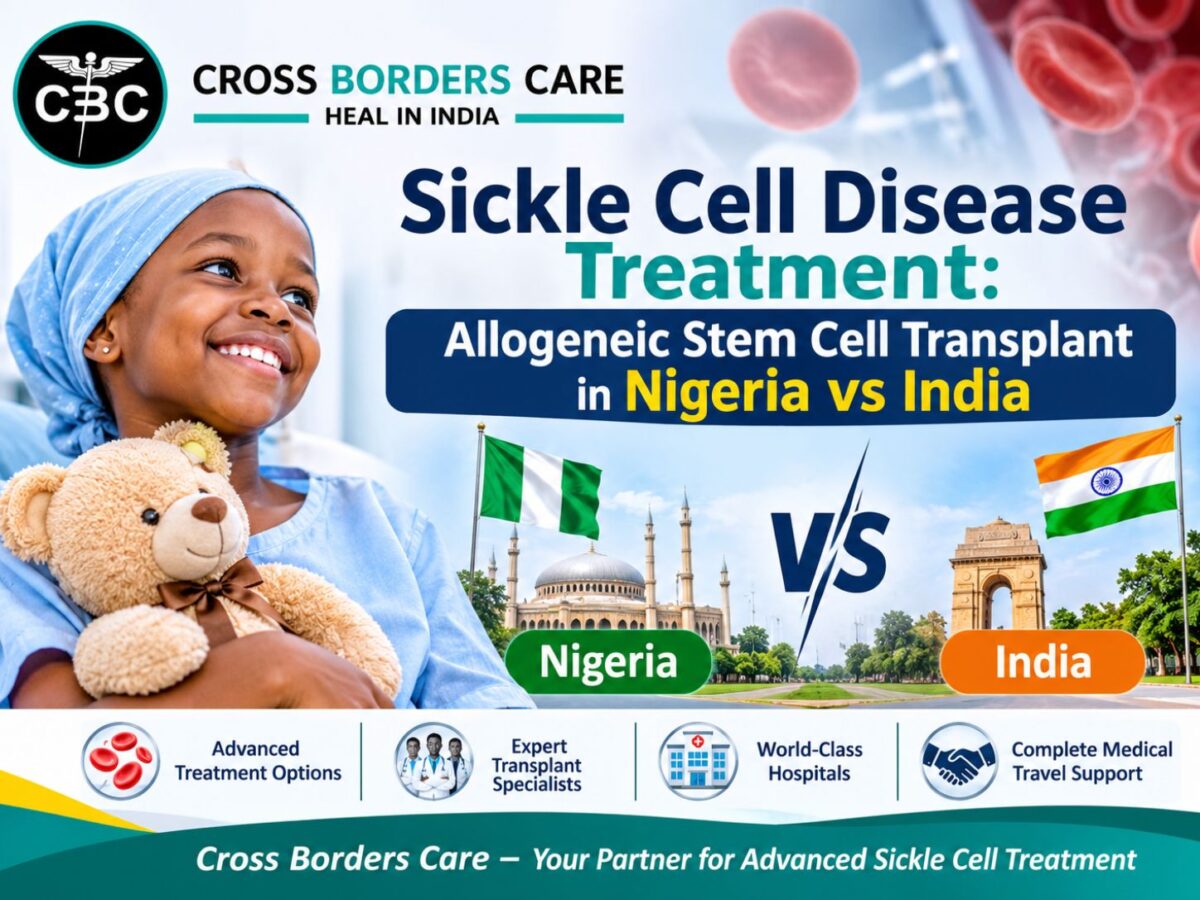
Sickle Cell Disease Treatment: Allogeneic Stem Cell Transplant in Nigeria vs India

Nigeria has the largest number of people living with Sickle Cell Disease in the world. For many families, a cure once felt out of reach. Today, curative options exist, but access, expertise, and cost differ between the countries. This guide will help you understand the options for allogeneic stem cell transplant in India.

What is Allogeneic Stem Cell Transplant?

It is a medical procedure in which a patient receives healthy stem cells from another person to replace damaged, diseased and destroyed bone marrow. It treats certain blood cancers and serious blood disorders, including leukaemia, lymphoma, myelodysplastic syndromes, and aplastic anaemia.

The donor may be a matched sibling, an unrelated volunteer, a partially matched family member (haploidentical donor) or, in some cases, a source of donated umbilical cord blood.

How Does an Allogeneic Stem Cell Transplant Work?

  • Donor matching: Doctors perform HLA (human leukocyte antigen) testing to identify a suitable donor.
  • Conditioning treatment: The patient receives chemotherapy, sometimes with radiation, to prepare the body for transplantation.
  • Stem cell infusion: Healthy donor stem cells are infused through an intravenous line, similar to a blood transfusion.
  • Engraftment: The transplanted stem cells travel to the bone marrow and begin producing new blood cells, typically within 2–4 weeks, depending on the stem cell source and treatment.
  • Recovery and monitoring: Doctors monitor blood counts, infections, immune recovery and transplant-related complications.

Which Hospitals Currently Offer Sickle Cell Stem Cell Transplants in Nigeria?

Nigeria has made progress in providing curative treatment for sickle cell disease. However, the number of hospitals offering allogeneic stem cell transplantation remains limited.Some of the centres with documented transplant experience include:

  • Lagos University Teaching Hospital (LUTH), Lagos: In partnership with the Sickle Cell Foundation Nigeria (SCFN), LUTH operates a dedicated bone marrow transplant programme. Its first group of patients began undergoing transplantation in August 2024.
  • University of Benin Teaching Hospital (UBTH), Benin City: This hospital performed Nigeria’s first reported stem cell transplant for sickle cell disease in 2011.
  • Celltek Healthcare Medical Center, Benin City: This centre has documented experience with matched-sibling and haploidentical stem cell transplantation.

What Are the Limitations of Allogeneic Stem Cell Transplantation in Nigeria?

  • Limited Availability of Half-Matched Donor Transplants
  • Limited Number of Experienced Transplant Specialists
  • Gaps in Advanced Support Services
  • Limited Access to Advanced Transplant Infrastructure

Nigeria vs India at a glance

Factor Nigeria India
Routine SCD care (hydroxyurea, transfusion, screening) Widely available, improving Widely available
Paediatric BMT for SCD Very limited programmes Established paediatric BMT units
Donor options Mostly matched sibling Matched sibling and haploidentical
Travel and stay None Visa, flights, several months’ stay near hospital
Family and cultural support Strong, at home Needs planning (caregiver, accommodation)
Cost Matched BMT – 22000 usd
Half Matched – Not available
Matched BMT – 22000 usd
Half Machted – 26000 usd
Follow-up after transplant Local Must be coordinated with a Nigerian haematologist

Why Many Nigerian Families Are Turning to India?

Local treatment is always easiest for families, but BMT for SCD needs a very specialised set-up, and that is where families often look to India, because of the following reasons:

  • Dedicated paediatric BMT units. Several Indian hospitals like Rainbow Children Hospital in India under the guidance of Dr Nandini Hazarika run separate transplant programmes for children, with child-friendly isolation rooms, paediatric nursing and teams that handle only children.
  • Experience with different donor types. Not every child has a fully matched sibling. Indian centres regularly perform half-matched (haploidentical) transplants, which widens the number of children who can be considered.
  • Cost. Treatment in India is generally much lower than in Europe or North America. 2200 usd for full matched stem cell transplant and 28000 usd for half matched bone marrow transplant
  • Proximity and travel. India is reachable from Nigeria with a medical visa, and many hospitals have international patient departments with interpreters and coordinators.
  • Accredited hospitals. Many leading hospitals hold national or international accreditation, such as Fortis Memorial Hospital and Indraprastha Apollo Hospital.

India is not the right choice for every child, and it involves travel, a long stay and separation from home. The best decision is made after a doctor reviews the child’s reports.

Best BMT Doctors in India for Sickle Cell Disease

Dr. Gaurav Kharya – Indraprastha Apollo Hospital, New Delhi

Dr. Gaurav Kharya is a paediatric haematology and bone marrow transplant specialist with international fellowship training.He has published research on haploidentical transplantation for sickle cell disease, including the APOLLO Protocol, designed to improve transplant outcomes.

Dr Rayaz Ahmed: Max Healthcare

Dr Rayaz Ahmed is a clinical haematologist and bone marrow transplant specialist at Max Super Speciality Hospital in Delhi, India. He has 15 + years of experience and has performed more than 1000+ bone marrow transplants. His areas of expertise include autologous stem cell transplant, allogeneic stem cell transplant, and haploidentical stem cell transplant.

Dr Nandini Hazarika: Madhukar Rainbow Children’s Hospital

Dr Nandini Hazarika holds an MBBS in Paediatrics and works as a Consultant in Medical Oncology and BMT. She is currently associated with Madhukar Rainbow Children’s Hospital in Delhi and has earlier worked with leading Delhi NCR hospitals. She has done more than 150 bone marrow transplants in the last 8 years for conditions like thalassemia, aplastic anaemia, and leukaemias.

Dr Vikas Dua-Fortis Memorial Research Institute, Gurugram

Dr Vikas Dua is the Principal Director and Head of Pediatric Haematology and BMT at Fotis. With 20+ years of experience across different hospitals, his areas of expertise include sickle cell anaemia and bone marrow transplants. He and his team have done more than 200 pediatric transplants and specialised in pediatric haploidentical transplants.

How does CBC connect you with these doctors?

Share your child’s records. Send the haemoglobin electrophoresis report, recent blood counts, crisis and transfusion history, and any scans or organ tests. Our team checks that nothing is missing.

We approach the right specialist. Based on your child’s condition and your preference, we send the case to one or more of the doctors above and ask whether a transplant is suitable.

Donor matching. If a transplant looks possible, we help arrange HLA typing for the child and family donors.

Opinion and estimate. You receive the doctor’s recommendation and an itemised cost estimate so that you can decide without pressure.

Travel and stay. If you go ahead, we support medical visa letters, flights, accommodation near the hospital and caregiver arrangements.

Coordination during treatment. CBC stays in touch between you and the hospital team for appointments and updates.

Return home. We connect the Indian team with your Nigerian haematologist so follow-up continues safely at home.

Don’t wait for the “right time”

Many Nigerian families live with sickle cell for years. They learn to manage the pain crises, the hospital nights and the missed school days. Some tell themselves they will look at transplant “when things get worse”, or “when we can afford it”, or “when we are sure”. Others fear the cost, the distance, or sending a child so far from home.

These fears are real, and no parent should be judged for them. But waiting also has a cost. With every crisis, the disease can quietly affect a child’s organs, growth and schooling. Transplant works best when it is considered early, while the child is as healthy as possible. You do not have to decide today. You only have to ask the question.

Take the first step with Dr Nadeem Khan.

Talking to someone does not commit you to anything. It simply tells you whether your child is a candidate and what the road would look like.

Dr Nadeem Khan, director at CBC, has coordinated 500+ transplants for families travelling from Africa to India.

When you contact him, he will:

  • Listen first. He will understand your child’s history, your family situation and your concerns.
  • Review your child’s reports and tell you honestly whether a transplant looks suitable or not.
  • Guide you on donors. He will explain sibling and family HLA testing, and what to do if there is no fully matched donor.
  • Connect you with the right specialist among our partner doctors in India, based on your child’s needs.
  • Give you a clear, itemised cost estimate, so there are no surprises later.
  • Plan your journey with you: medical visa letters, travel, accommodation and caregiver arrangements.
  • Stay with you through treatment and help link the Indian team with your Nigerian doctor for care after you return home.

You do not have to figure this out alone. Send us your child’s reports, or send a message with your questions.

Contact Dr Nadeem Khan at CBC: 91 813 0786 779

Categories
Uncategorized

How Cameroon Patients Can Prepare Financially for Bone Marrow Transplant in India

For many families in Cameroon, planning a Bone Marrow Transplant (BMT) in India is not only a medical decision — it is a financial and emotional commitment that requires careful preparation.

While India is considered one of the most affordable destinations for advanced Bone Marrow Transplant treatment, many patients still underestimate the complete cost of the journey. Beyond hospital bills, there are additional expenses related to donor testing, accommodation, medicines, recovery care, and international travel.

With structured support by Cross Border Care under the guidance of Dr. Nadeem Khan, Cameroon patients can better understand the full financial picture before starting treatment in India.

What is the Overall Cost of A Bone Marrow Transplant in India?

The total cost of a Bone marrow transplant in India depends on several medical factors, including:

  • Disease type
  • Type of transplant
  • Donor availability
  • Infection risks
  • Hospital stay duration
  • ICU requirements
  • Post-transplant complications

In general, Bone Marrow Transplant costs in India are still significantly lower compared to Europe, the US, or the Middle East, which is why many African patients choose India for treatment. However, families should prepare for both direct and indirect expenses.

Pre-Transplant Medical Evaluation Costs

Before the blood stem cell transplant in Delhi, patients undergo extensive investigations.

These may include:

  • Blood tests
  • Bone marrow biopsy
  • PET/CT scans
  • Organ function tests
  • Infection screening
  • HLA typing for donor matching

These evaluations are critical because transplant success depends heavily on patient condition and donor compatibility. Cross-border helps Cameroon patients understand which tests can be completed locally before travelling, helping reduce unnecessary expenses in India.  Top Hematologist in India for Bone Marrow Transplant – A Guide for Ethiopian Patients

Donor Testing and Matching Expenses

One of the most important financial considerations is donor testing.

Costs may vary depending on:

  • Number of potential donors tested
  • HLA matching requirements
  • Registry donor search needs
  • Additional compatibility testing

In many cases:

  • Siblings are tested first
  • Parents may be evaluated for a half-match transplant
  • Unrelated donor registries may be explored if needed

Modern haploidentical transplant techniques have increased treatment options for patients without a fully matched donor. Under the guidance of Dr Nadeem Khan, families receive clearer guidance on donor preparation and expected testing requirements before arriving in India.

Hospital Admission and Transplant Procedure Costs

The main hospital expenses usually include:

  • Isolation transplant room charges
  • Chemotherapy and conditioning treatment
  • Stem cell infusion procedure
  • ICU support if required
  • Blood product support
  • Infection management
  • Specialist consultations

The length of hospital stay can directly affect the total budget. Patients with complications may require longer admission and higher medical costs. This is why financial planning before travel is extremely important for international patients.

Top Three Doctors for Bone Marrow Transplant Surgery in Delhi

Hidden Expenses Many Cameroon Patients Do Not Expect

One of the biggest mistakes families make is planning only for the transplant package itself. Several hidden costs may arise during treatment, including:

Travel and Visa Costs

  • Medical visa fees
  • Flight tickets
  • Attendant travel expenses
  • Emergency travel changes

Accommodation Costs

Many patients need accommodation:

  • Before hospital admission
  • After discharge
  • During recovery monitoring

Families often stay near the hospital for several weeks or months.

Daily Living Expenses

  • Food
  • Local transport
  • SIM cards and internet
  • Translation assistance if needed

Infection Protection

After transplant, patients may require:

  • Special masks
  • Sanitized environments
  • Nutritional supplements
  • Additional preventive medicines

Cross-border care helps families prepare for these practical realities before arriving in India.

Post-Transplant Medicine and Recovery Costs

Recovery after a Bone Marrow Transplant continues long after hospital discharge.

Patients may require:

  • Anti-infection medicines
  • Immune suppression drugs
  • Blood monitoring
  • Follow-up consultations
  • Repeat scans and tests

Some medicines may continue for several months, depending on recovery progress and graft acceptance.

Families should always keep a separate recovery budget instead of planning only for the hospital procedure.

Top Three Hospitals for Bone Marrow Transplant Surgery in Delhi

Accommodation Planning for Long-Term Stay

Many Cameroon families underestimate how long they may need to stay in India. Depending on recovery, patients may remain in India for:

  • Several weeks after discharge
  • Regular follow-up monitoring
  • Emergency infection management

Accommodation choices usually depend on:

  • Budget
  • Distance from the hospital
  • Hygiene standards
  • Availability of cooking facilities

Cross-border support teams often help families identify safer and more convenient stay options near transplant centres.

Why Financial Transparency Matters Before Travelling

For international patients, unclear budgeting creates unnecessary stress during treatment.

Proper planning helps families:

  • Avoid treatment interruption
  • Prepare emergency reserves
  • Understand realistic timelines
  • Reduce emotional pressure during recovery

This is especially important in Bone Marrow Transplant In India because unexpected medical complications can affect treatment duration and cost.

With coordinated cross-border care under Dr. Nadeem Khan, Cameroon patients receive structured guidance about treatment planning, expected medical stages, and practical financial preparation before arriving in India.

Best Famous Hospitals for Bone Marrow Transplant

Final Thoughts

Bone Marrow Transplant in India is one of the most advanced and life-saving treatments available for serious blood disorders and cancers. But successful treatment is not only about choosing the right hospital — it is also about preparing financially for the full journey ahead.

For Cameroon patients travelling to India, understanding transplant costs, donor testing, accommodation, recovery care, and post-treatment medicines in advance can make the process more manageable and less stressful.

With experienced medical guidance and organized cross-border care support, families can focus more on recovery and less on uncertainty during their treatment journey in India.

Categories
Uncategorized

Top 5 Stem Cell Transplant Doctors in India for Ethiopian Children

When your child is diagnosed with a serious condition like leukemia, thalassemia, or sickle cell disease, every decision matters. Many Ethiopian families choose India for pediatric stem cell (bone marrow) transplant because of its advanced hospitals, experienced doctors, and affordable treatment.

At Cross Border Care , we make this journey simple. We connect your child with the right doctor for the right condition, manage the entire process, and support you from the first consultation to full recovery.

How We Connect You with the Right Doctor

Every child’s condition is unique, so we don’t believe in one-size-fits-all treatment.

  • We carefully review your child’s medical reports
  • We match you with the best stem cell transplant doctor in India for Ethiopian children based on the disease
  • We arrange online consultations before travel
  • We secure treatment at top hospitals like:
  • Apollo Hospitals,Fortis Healthcare, andMax Healthcare

Top Pediatric Stem Cell Transplant Doctors We Work With

We connect African patients with some of India’s most trusted specialists:

Dr. Gaurav Kharya

Indraprastha Apollo Hospital

Best for: Sickle Cell Disease, Thalassemia, complex transplant cases

Dr. Vikas Dua

Fortis Memorial Research Institute
Best for: Leukemia, pediatric cancers, bone marrow failure

Dr. Nandini Hazarika

Rainbow Children’s Hospital, New Delhi
Best for: Blood disorders requiring transplant and oncology care

Dr. Neha Rastogi

Best for: Pre and post-transplant care

Dr. Prachi Jain

Best for: Early diagnosis and treatment planning

Doctor Comparison – Helping You Choose the Right Specialist

Doctor Hospital Best For Key Strength
Dr. Gaurav Kharya Indraprastha Apollo Hospital Sickle Cell, Thalassemia Expert in difficult donor transplants
Dr. Vikas Dua Fortis Memorial Research Institute Leukemia, Cancer Strong experience in critical pediatric cases
Dr. Nandini Hazarika Rainbow Children’s Hospital New Delhi Blood Disorders Combined oncology + transplant care
Dr. Neha Rastogi India Centers Recovery Care Post-transplant management expert
Dr. Prachi Jain India Hospitals Early Cases Diagnosis & planning specialist

How Your Child’s Treatment Happens in India

Before Travel

  • We will arrange online consultation with doctor
  • Treatment plan and cost estimate
  • Visa and travel support

After Arrival

  • Airport pickup and assistance
  • Fast hospital admission

Treatment Process

  • Pre-transplant tests
  • Stem cell transplant procedure
  • Intensive monitoring

Recovery Phase

  • 2–4 weeks hospital stay
  • Infection control and care

After Discharge

  • Follow-up support
  • Long-term care guidance

Why Ethiopian Families Choose Us

  • We help in personalized doctor matching
  • Trusted hospital network
  • Experience with international patients
  • End-to-end support from us right from hospital admission to discharge

Final Words

A stem cell transplant can save your child’s life—but choosing the right doctor and hospital is critical.

With experts like Dr. Gaurav Kharya, Dr. Vikas Dua, and Dr. Nandini Hazarika, and the dedicated support of Cross Border Care Medical Consultancy, Ethiopian families can access world-class treatment in India with confidence. We are here to guide you, support you, and stand with you—every step of the way.

Categories
corneal transplant

Top 5 Bone Marrow Transplant Doctors in India for Ethiopian Patients

When a patient in Ethiopia is diagnosed with conditions like leukemia, lymphoma, or thalassemia, one of the biggest challenges is access to advanced treatment like bone marrow transplant (BMT). Many families feel confused about where to go, which doctor to trust, and how to manage travel.

This is exactly why India has become a trusted destination—because of experienced doctors, advanced hospitals, and affordable treatment options. In this blog, we will guide you through the top 5 bone marrow transplant doctors in India for Ethiopians and  how we help African patients connect with them easily.

Dr. Shishir Seth – Indraprastha Apollo Hospital, New Delhi

Dr. Shishir Seth is one of the most trusted hematologists in India for Ethiopians with 20+ years of experience in bone marrow and stem cell transplant.

He specialises in:

  • Leukaemia and blood cancers
  • Stem cell transplantation
  • Complex hematological disorders

Apollo Hospitals is one of India’s most established healthcare groups, known for international patient care and advanced transplant units. Ethiopian patients prefer him because of experience + strong hospital support system

Dr. Rahul Bhargava – Fortis Memorial Research Institute

Dr. Rahul Bhargava is among the most experienced BMT specialists in India with 20+ years of experience and 1000+ bone marrow transplants performed.

Specialties:

  • Bone marrow transplant
  • Pediatric and adult blood disorders
  • Advanced stem cell therapy

Fortis is a top-tier hospital for stem cell transplant in India for Ethiopians with world-class infrastructure for transplant procedures.

Dr Harsh Dua-–Indraprastha Hospital, New Delhi

Designation – Medical Oncologist Education – MBBS degree from the University of Delhi in 1973. MD in Medicine from the University of Delhi in 1977.
Specialised training in Haematology/ oncology at University Hospital Queen’s Medical Centre Nottingham, England .Experience – 50+ years

Dr. Vinod Kumar Raina – Fortis Healthcare

Dr. Vinod Kumar Raina is a senior oncologist and hematology expert with 30+ years of experience.

Specialties:

  • Blood cancers
  • Chemotherapy and transplant support
  • Advanced oncology care

He has treated thousands of patients and is known for his clinical expertise in complex cancer cases.

Dr Pravas Kumar Mishra – BLK-Max Super Speciality Hospital

Dr. Pravas Kumar Mishra is an experienced hematologist specializing in:

  • Bone marrow transplant
  • Blood disorders and cancers
  • Advanced hematology treatments

BLK-Max Hospital is one of the leading centers in Delhi for bone marrow transplant with modern facilities.

Which Adult Patients Should Consult Which Bone Marrow Transplant Doctor


Condition (Adult Patients) Recommended Doctor Hospital Why This Doctor?
Adult leukemia (ALL, AML), lymphoma Dr. Shishir Seth Apollo Hospitals Strong expertise in adult bone marrow transplant and complex blood cancers
High-risk or relapsed blood cancer cases Dr. Rahul Bhargava Fortis Memorial Research Institute Extensive experience with 1000+ transplants and complex cases
Multiple myeloma / advanced hematology cases Dr. Pravas Kumar Mishra BLK-Max Super Speciality Hospital Specialized in advanced hematology and transplant techniques
Blood cancers with oncology complications Dr. Vinod Kumar Raina Fortis Healthcare 30+ years experience in oncology + hematology support
Patients needing second opinion or complex diagnosis Dr. Shishir Seth Apollo Hospitals Reliable for accurate diagnosis and treatment planning

Simple Guidance for Adult Patients from Cross Border Care

  • Newly diagnosed leukemia? → Dr. Shishir Seth
  • Relapse or complicated case? → Dr. Rahul Bhargava
  • Multiple myeloma / advanced blood disorder? → Dr. Pravas Mishra
  • Cancer + transplant combined case? → Dr. Vinod Kumar Raina

Important for Ethiopian Patients

Choosing the wrong doctor can delay treatment. That’s why we at Cross Border Care don’t randomly refer our international patients to anyone.
We:

  • Check your reports
  • Understand your condition
  • Then connect you with the right specialist for your exact case

Final Words

Stem Cell Transplant in India for Ethiopians is a critical treatment, and choosing the right doctor can make a big difference. With experienced specialists like Dr. Shishir Seth, Dr. Rahul Bhargava, and others, Ethiopian patients can access world-class care in India without unnecessary delays.

If you or your loved one needs treatment:

Contact us today. We will guide you personally and connect you with the right doctor—quickly and safely. Know More

Categories
Uncategorized

Top Hematologist in India for Bone Marrow Transplant – A Guide for Ethiopian Patients

When someone in the family is diagnosed with a serious blood disorder like leukaemia or thalassemia, everything changes. For many patients in Ethiopia, one of the biggest challenges is access to advanced treatments like bone marrow transplant (BMT). This is why many families today are choosing India, not just for affordability, but for experienced doctors for stem cell transplant in India for Ethiopians and better chances of recovery.

One of the trusted names in this field is Dr Shishir Seth, a senior haematologist associated with Indraprastha Apollo hospital Delhi. Let us see how you can connect with him for your stem cell transplant in India.

Why Patients from Ethiopia Come to India

We speak with many Ethiopian families every month, and their concerns are often the same—Is the treatment safe? Can we afford it? Who will guide us?

India answers these concerns in a practical way:

  • Treatment cost is significantly lower than in the US or Europe
  • Doctors are highly experienced in bone marrow transplants
  • Hospitals have advanced transplant units and infection control
  • International patient support systems are well established

Indraprastha Apollo Hospital has been treating international patients for years and has a dedicated team to handle cross-border cases.

About Dr. Shishir Seth

Dr. Shishir Seth is known for his work in hematology and bone marrow transplantation. He has experience in treating complex blood disorders and has handled both Indian and international patients.

At Apollo Hospital, he works with a full transplant team, including specialists in critical care, infection control, and post-transplant recovery. This team-based approach is very important in procedures like BMT, where every step matters.

His focus areas include:

  • Leukemia and lymphoma treatment
  • Bone marrow transplant (autologous and allogeneic)
  • Thalassemia and aplastic anemia care

For patients coming from Ethiopia, what matters most is not just the doctor—but the system around the doctor. That’s where Apollo’s infrastructure plays a big role.

How Cross Border Care Helps You Get Treatment in India (Step-by-Step)

Now the most important part—how do you actually come to India and start treatment?
This is where we come in as a medical consultancy. We don’t just give information—we handle the complete process for you.

Step 1: Medical Report Review

You send us your medical reports on WhatsApp or email. We get them reviewed by Dr. Shishir Seth and the team at Apollo Hospital.

Step 2: Treatment Plan & Cost Estimate

We share:

  • Doctor’s opinion
  • Whether transplant is needed
  • Estimated cost
  • Duration of stay

Everything is explained clearly so you can decide with confidence.

Step 3: Visa & Travel Support

Once you confirm, we help you with:

  • Medical visa invitation letter
  • Visa guidance
  • Travel planning

Step 4: Arrival in India

When you arrive:

  • Airport pickup is arranged
  • Accommodation is booked near the hospital
  • Hospital appointment is pre-scheduled

No confusion, no waiting.

Step 5: Treatment & Continuous Support

We stay connected during

  • Hospital admission
  • Transplant procedure
  • Recovery phase

You are not alone at any stage—we coordinate everything between you and the hospital.

Why Ethiopian Families Trust Us

We understand that coming to another country for treatment is not just a medical decision—it’s an emotional and financial one.

That’s why we focus on:

  • Clear and honest communication
  • Fast response on WhatsApp
  • Direct hospital connections
  • Complete support from start to finish

Our goal is simple: to make sure you reach the right doctor without delays or confusion.

Final Words

Bone marrow transplant in India for Ethiopians is a serious but life-saving treatment. Choosing the right doctor and hospital can make a big difference in outcomes.

With experts like Dr. Shishir Seth at Apollo Hospital, best hospital for bone marrow transplant in India for Ethiopians and with the right guidance, Ethiopian patients can access world-class care in India.

If you or your loved one needs help, you can reach out to Dr Nadeem Khan anytime.
We will guide you step by step—and help you start treatment without stress.

Categories
corneal transplant corneal transplant

Best Leukaemia Treatment in India for Ethiopians

When Leukaemia is diagnosed, time becomes precious. Families in Ethiopia often search:

  • Where can we get the best leukaemia treatment in India?
  • Which hospital in India is safest for blood cancer?
  • How much will it cost?
  • How long do we need to stay?

For advanced blood cancer care, Indraprastha Apollo Hospital in Delhi stands among India’s leading centers for hematology and bone marrow transplant. With support by Cross Border Care, leading medical consultants in India, Ethiopian patients can receive the best bone marrow transplant in India. This guide will explain everything to you.

Why Choose Indraprastha Apollo Hospital Delhi?

Leukaemia treatment in India for Ethiopians is complex. It requires:

  • Experienced hematologist
  • Dedicated bone marrow transplant unit
  • Advanced ICU backup
  • Strict infection control
  • Multidisciplinary tumor board planning

Indraprastha Apollo Hospital in Delhi offers all of this under one roof.

For serious conditions like:

  • Acute Lymphoblastic Leukaemia (ALL)
  • Acute Myeloid Leukaemia (AML)
  • Chronic Myeloid Leukaemia (CML)
  • Chronic Lymphocytic Leukaemia (CLL)

Early and accurate treatment planning makes the biggest difference.

Best Doctor for Leukaemia at Apollo

One of the leading blood cancer doctor in India for Ethiopians is:

Dr. Dipanjan Panda : Senior Consultant – Hematology & Bone Marrow Transplant

Expertise includes:

  • High-risk acute leukaemia
  • Chronic leukaemia management
  • Stem cell & bone marrow transplantation
  • Complicated relapse cases

Treatment decisions are not made alone — Apollo’s tumor board reviews each case carefully before starting therapy.

Best Treatment Options for Leukaemia in India

Chemotherapy

Chemo is the main treatment for acute leukaemia. Given in cycles. Requires hospital admission during the first phase.

Targeted Therapy

Special medicines for genetic-specific types like CML. Often oral tablets with regular monitoring.

Immunotherapy

Boosts immune response against cancer cells.

Bone Marrow Transplant (BMT)

Recommended in high-risk or relapsed cases. Indraprastha Apollo Hospital in Delhi has a specialized transplant unit with infection-controlled rooms.

How Many Days Will Ethiopian Patients Stay in India?

Length of stay depends on disease type.

Treatment Type Hospital Stay Total Stay in India
Chemotherapy Cycle 2–3 weeks
Full Acute Leukemia Work Up One week
Bone Marrow Transplant One Month Hospital Stay
Follow-up Visit Three weeks Three Months

Acute cases require longer first admission because doctors monitor blood counts closely.

Cost of Leukaemia Treatment in India

The cost of leukemia treatment in India for Ethiopians depends on stage, complications, and treatment type.

Chemotherapy (per cycle) $1,000 – $15,00
Work Up $ 1,500 – $2,000
Targeted Therapy (monthly) $1,500 – $3,000
Bone Marrow Transplant $30,000 – $35,000
ICU (if required) Additional

Compared to many other countries, India offers advanced treatment at significantly lower cost while maintaining international standards. Exact estimate will be provided to you once you send us your reports.

Travel Guide for Ethiopian Patients

Medical Visa

  • Hospital invitation letter provided
  • Visa documentation support
  • Fast processing in most cases

Flight

Addis Ababa to Delhi: Approx. 6–7 hours direct.

Airport Pickup

Arranged by Cross Border Care team.

Living Expenses in Delhi

Expense Approximate Monthly Cost
Budget Accommodation $400 – $6,00
Serviced Apartment $7,00 – $1,000
Food & Daily Expenses $50

For transplant patients, special hygienic food and a low-infection diet will be arranged by the Cross Border Care team.

What Cross Border Care Does at Every Step

This is where coordination makes the real difference.

Stage Cross Border Care Support
Before Travel Collect reports & get doctor opinion
Consultation Arrange online video meeting
Cost Planning Share transparent estimate
Visa Documentation assistance
Arrival Airport pickup & admission
During Treatment Daily coordination & language help
After Discharge Follow-up planning

Families are never left alone to manage hospital systems.

After Returning to Ethiopia

Most follow-ups with your doctor at Apollo can be done online. We will help you with:

  • Digital report sharing
  • Video consultations
  • Medication adjustments

Only critical procedures require travel again.

Why Ethiopian Families Choose Treatment Apollo Through Cross Border Care

✔ No waiting time
✔ Everything is arranged in advance
✔ International patient support unit
✔ Transparent cost planning
✔ Complete travel coordination

Leukaemia treatment in India for Ethiopians demands precision, safety, and strong medical infrastructure. Apollo Delhi provides that foundation. Cross Border Care and team ensures the journey is smooth and organized at every step.

Categories
Cancer tratment corneal transplant

Bone Cancer Treatment For Ethiopian Patients in India

Indraprastha Apollo Hospital, New Delhi is one of the best hospitals for bone cancer treatment in India for Ethiopians. International patients seeking world-class oncology care, Apollo Delhi offers a structured, transparent, and well-supported treatment journey — from online consultation to long-term follow-up care.
This guide explains how Ethiopian patients can contact Apollo Delhi, start treatment, stay in India, and manage follow-ups or relapse care, step by step.

Bone cancer Treatment in India: Why Apollo Is the Number One Choice?

Ethiopian patients prefer Indraprastha Apollo Hospital because it offers:

  • Experienced Orthopedic Oncology doctor
  • Advanced limb-salvage bone cancer surgery
  • Modern chemotherapy & radiation therapy units
  • NABH & JCI-accredited international standards
  • Dedicated International Patient Services
  • Affordable and transparent bone cancer cost in India

Apollo Delhi treats patients from Africa, Middle East, and Europe every year with personalized cancer care.

Steps to Get Bone Cancer Treatment at Indraprastha Apollo Hospital India

Step 1: How Ethiopian Patients Can Contact Apollo Delhi

Ethiopian patients can start their treatment journey without traveling to India first.

Ways to Contact Apollo Delhi:

What to Share:

  • Diagnosis details
  • Medical reports (X-ray, MRI, biopsy, PET-CT if available)
  • Brief medical history

We will share your report with Dr Sameer Kaul, senior oncologist in India at Apollo, review reports and schedule a video consultation with the appropriate cancer specialist.

Step 2: Online Consultation & Treatment Planning

During the online consultation, Dr Sameer Kaul and Dr Nadeem Khan, director at Cross Border Care, will explain:

  • Type and stage of bone cancer
  • Whether surgery is required
  • Need for chemotherapy or radiation
  • Estimated treatment duration
  • Approximate treatment cost

This helps Ethiopian patients plan travel, budget, and stay in advance.

Step 3: Bone Cancer Treatment at Apollo Hospital Delhi – How It Works

Bone cancer treatment in India for Ethiopians at Apollo Delhi follows a multidisciplinary approach, involving:

  • Orthopedic Onco Surgeon
  • Medical Oncologist
  • Radiation Oncologist
  • Pathology & Imaging experts

Common Treatment Options:

  • Bone Cancer Surgery
    Tumor removal
    Limb-salvage surgery (preferred whenever possible)
  • Chemotherapy
    Before or after surgery
  • Radiation Therapy
    In selected cases
  • Targeted Therapy / Immunotherapy
    For advanced or recurrent cases

Each treatment plan is customized based on the patient’s condition. We will explain the entire treatment course to you after reviewing your reports

Step 4: Medical Visa, Travel & Arrival in Delhi

Once treatment is confirmed:

  • Apollo hospital issues a Medical Invitation Letter
  • Patient applies for an Indian Medical Visa
  • One attendant can apply for a Medical Attendant Visa

On arrival in Delhi:

  • Airport pickup will be arranged by Cross Border Care
  • Patient is taken to accommodation near by or hospital by us
  • Initial tests are completed within 24–48 hours

Step 5: Stay, Food & Daily Support for Ethiopian Patients

Accommodation Options Near Apollo Delhi:

  • Hospital guest houses
  • Serviced apartments
  • Budget hotels close to the hospital

Food:

  • Hospital diet during admission
  • External meal services available
  • African-friendly or custom meals can be arranged on request by Cross Border care and team

Attendant Support:

  • One attendant can stay with the patient
  • Same accommodation is arranged by us

Apollo’s International Patient team, Bone Cancer Specialists in India for Ethiopians along with Dr Nadeem Khan assists with daily appointments, billing, and coordination.

Step 6: Bone Cancer Treatment Cost at Apollo Hospital Delhi

Approximate cost range (USD):

Treatment Component Estimated Cost
Diagnostic tests $800 – $1,500
Bone cancer surgery $6,000 – $12,000
Chemotherapy $3,000 – $6,000
Radiation therapy $5,000 – $7,000
Total Estimated Cost $15,000 – $18,000


Costs depend on cancer stage, treatment type, and hospital stay duration. We will help you with valid discounts and Dr Nadeem Khan will explain everything about it as the treatment proceeds.

Step 7: Discharge, Recovery & Return to Ethiopia

After treatment completion in 3 to 4 months:

  • Patient receives discharge summary
  • Medicines & recovery guidelines are explained
  • Online follow-up schedule is shared by Dr Sameer Kaul

Most Ethiopian patients can return home safely once doctors approve travel.

Step 8: Follow-Ups After Returning to Ethiopia

Indraprastha Apollo Hospital Delhi offers online follow-up consultations, so patients do not need to travel frequently.

Follow-Ups Include:

  • Report review
  • Medicine adjustments
  • Symptom monitoring
  • Lifestyle & rehabilitation advice

Reports can be shared via email or WhatsApp with Dr Nadeem Khan for further support.

What If Cancer Relapses or Further Treatment Is Needed?

If there is a relapse or complication:

  1. Patient can share latest reports with Cross Border Care online
    2. Apollo oncology team will review the case
    3. Doctors advise:
  • Change in medicines
  • Additional chemotherapy
  • Or re-travel to India if required

If re-travel is needed, we will again assist with:

  • Medical invitation letter
  • Visa support
  • Fast appointment scheduling

This ensures continuity of care, even across borders.

How Cross-Border Care Helps Ethiopian Patients

Our coordinators will work alongside Apollo to:

  • Speed up appointments
  • Simplify communication
  • Manage travel & stay
  • Support follow-ups after return

This makes the entire treatment journey smooth, guided, and stress-free.

Conclusion

Indraprastha Apollo Hospital, New Delhi offers Ethiopian patients a complete bone cancer treatment ecosystem — advanced medical care, international standards, and long-term follow-up support.
From first online consultation to recovery and future care, Cross Border Care in partnership with Indraprastha Apollo Delhi Hospital ensures that Ethiopian patients receive trusted, transparent, and compassionate cancer treatment in India.

Categories
Cancer tratment Uncategorized

Stage 1 Cervical Cancer Treatment for Ethiopian Women

For many women, especially from African countries like Ethiopia, Kenya, Uganda or Tanzania, the diagnosis of Stage 1 cervical cancer brings fear, confusion and endless questions. But the good news is: Stage 1 is highly treatable, especially in India, where cancer care is now advanced. Indian is also known for providing world class cancer treatment services to international patients.

This blog explains the best treatment options for Stage 1 cervical cancer in India, expected cost, success rate, travel guidance, and how Cross Border Care helps international patients choose the right hospital — safely and quickly.

Why India for Stage 1 Cervical Cancer Treatment?

Most African countries have limited resources for cancer screening and very few specialists. In India you get,

  • World-class cancer hospitals (Apollo, Fortis, Medanta)
  • Specialised gynecologic oncologists
  • Advanced surgeries like fertility-preserving treatment
  • Modern radiotherapy available widely
  • Affordable treatment (70% cheaper than USA/UK/UAE)
  • Smooth process for international patients

For Stage 1 cervical cancer, Indian hospitals provide the same treatment protocols as US/Europe — but at one-fourth the cost.

What Is Stage 1 Cervical Cancer?

Stage 1 means the cancer is limited only to the cervix and has not spread outside. This makes it highly curable when treated on time. The survival rate is 92 to 95%

What are the treatment options?

The treatment options depend on whether women want future pregnancies or not. India offers fertility preserving and curative treatments like:

Cone Biopsy: It is a very small and safe procedure for Stage 1 A cervical cancer patients in which a cone shaped portion of cervix containing cancer cells is removed. No need for uterus removal and fertility is preserved. Its success rate is 90 to 95%.

Simple Hysterectomy: It is recommended for Stage 1 A and 1 b. In this surgery the uterus and cervix are removed but the ovaries are kept intact. It completely removes cancer from the body and the complication rates are also less. Its success rate is 95%

Radical Hysterectomy: This removes the uterus , cervix and the tissues around the cervix. It also involves the removal of pelvic lymph nodes. The success rate is 93 to 95%.

Fertility Preserving Surgery: For women who want to have children in future, India offers fertility preserving surgery and it is available only in top hospitals of India. In this surgery, the uterus is preserved and only the cervix is removed.

Sentinel Node Mapping: In this treatment option, the lymph nodes are checked to see if cancer has spread microscopically. It helps to decide if radiation is needed and also improves the accuracy of treatment planning.

Minimally Invasive Surgery: India is also known for advanced minimally invasive techniques which involve very small cuts and less pain. The hospital stay is also short and the recovery is fast. It is difficult to find minimally invasive techniques at cancer hospitals in Ethiopia. That is why many international women prefer to get cervical cancer surgery in India due to availability of minimally invasive techniques and quick healing times.

Radiation therapy: If surgery is not suitable due to age or medical conditions, then radiation therapy is also an effective alternative in India. It includes:

  • External Beam Radiation therapy
  • Internal Beam Radiation Therapy

HPV Testing and Follow Up Care

After the treatment, regular follow up is essential. So HPV testing and pelvic examinations are extremely necessary. The cancer hospitals in India will provide you with a structured follow up schedule once you are done with the treatment here.

Best hospital for Cervical cancer treatment in India for Ethiopians

If you decide to get cervical cancer treatment in India, Indraprastha Apollo Hospital in Delhi should be your first choice. Why, here are the reasons.

  • You will find surgical oncologists, radiation oncologists, medical oncologists and support staff all under one roof here.
  • For cervical cancer, you will find advanced technology of radiotherapy here like Novalis Tx that is useful for accurate targeting of tumors while sparing the healthy tissue.
  • Indraprastha Apollo Hospital also offers brachytherapy for cervical cancer treatment.
  • For surgical treatment, laparoscopic and robotic surgery options both are available.
  • From modern imaging (PET-CT, MRI, 128-slice CT, etc.) to pathology, intensive care, supportive care and follow-up facilities — all under one roof. This matters especially for international patients who need a “complete package” from diagnosis to recovery.
  • Indraprastha Apollo is repeatedly ranked among the top private cancer hospitals in India and is a preferred destination for medical tourists — indicating trust in outcomes, infrastructure, and patient care.

Best Doctor for Cervical Cancer Treatment in India for Ethiopians

Dr Pakhee Aggarwal is the best doctor for cervical cancer care at Apollo.

  • She has 18 to 20 years experience in robotic and minimally invasive surgery.
  • She is MS(Obs and Gyn) , MRCOG (UK) and holds a fellowship in Robotic Gynae Oncology.
  • She performs radical hysterectomy, fertility preserving surgeries and minimally invasive robotic surgeries that offer fast recovery and fewer complications.
  • She specializes in cervical cancer, ovarian cancer, endometrial issues and fertility related care.
  • You will get clear communication and culturally sensitive support at Indraprastha Apollo Hospital.
  • Follow up and aftercare is managed very professionally here.

Contact Cross Border Care Today

  • Fast appointments with Dr. Pakhee Aggarwal at Apollo
  • Priority case review by top cervical cancer specialists
  • Discounted treatment packages for international patients
  • Medical visa invitation letter for Ethiopian families
  • Airport pickup and smooth hospital registration
  • Daily in-hospital support during treatment
  • Help with doctor meetings, reports, payments & coordination
  • Interpreter/language assistance whenever needed
  • Complete diagnosis–to–recovery arrangement under one team
  • Post-treatment follow-up even after you return to Ethiopia

Take the First Step Today

If you or your loved one has been diagnosed with Stage 1 cervical cancer, Cross Border Care is here to guide you to the best doctors, the best hospital and the most affordable treatment plan in India.
Message us on WhatsApp to get a free medical opinion and cost estimate. Your treatment starts the moment you reach out.